Mood history
Return to what you recorded instead of relying on a general memory of the week.
View progressA repeatable reflection rhythm
Combine a brief check-in, optional journaling, and a weekly review without making reflection another performance goal.
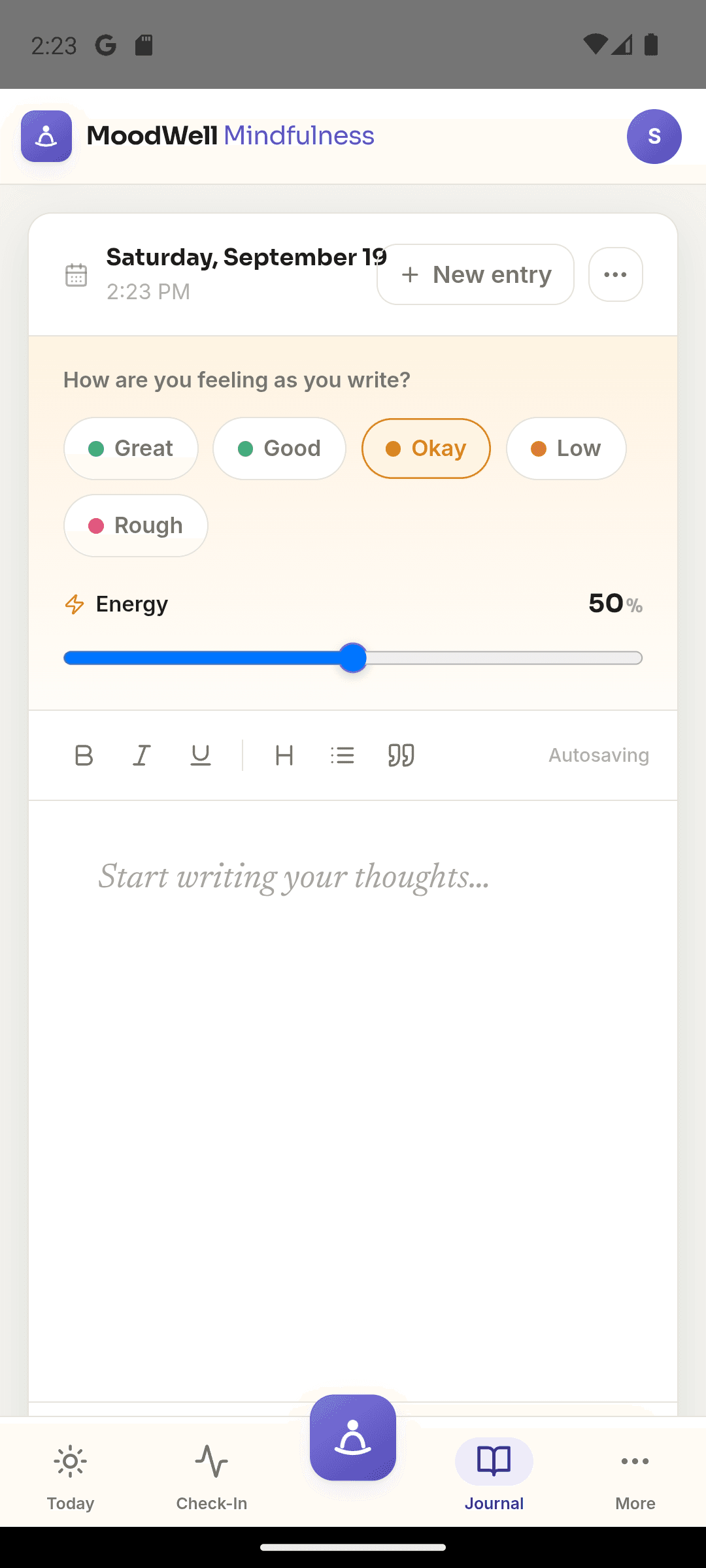
Choose a familiar moment, such as finishing lunch or closing your laptop, and record mood, stress, energy, and one detail from the day. Use the journal when you want to write more. Once a week, review your mood history and journal entries to notice recurring situations worth exploring.
The situation
Reflection often begins in moments of pressure, then disappears when things feel normal again. That leaves you with a record of crises and little context for the quieter days around them.
A small recurring check-in creates a broader record. Longer writing can remain optional and connected to the moments when it is useful.
Step by step
Use a reliable moment such as morning coffee, lunch, or closing your laptop.
See mood check-insRecord mood, stress, energy, and one influence. Stop there when that is enough.
Read the check-in guideUse a prompt or free writing, then keep any AI reflection optional.
Explore journalingLook for repeated context and choose one question for the next week.
See progress featuresA practical example
Record your mood, stress, and energy, then add a short note: 'Busy afternoon, but lunch with a friend gave me a break.' On a quiet day, 'Nothing unusual; steady energy' is still a useful entry. You do not need a dramatic event to make the check-in count.
At the end of the week, open your mood history and revisit a few entries. Ask, 'What was happening on the days I described as rushed?' If a particular moment needs more thought, give it a journal entry. The check-in provides the starting point; longer reflection is there when you want it.
Inside Moodwell
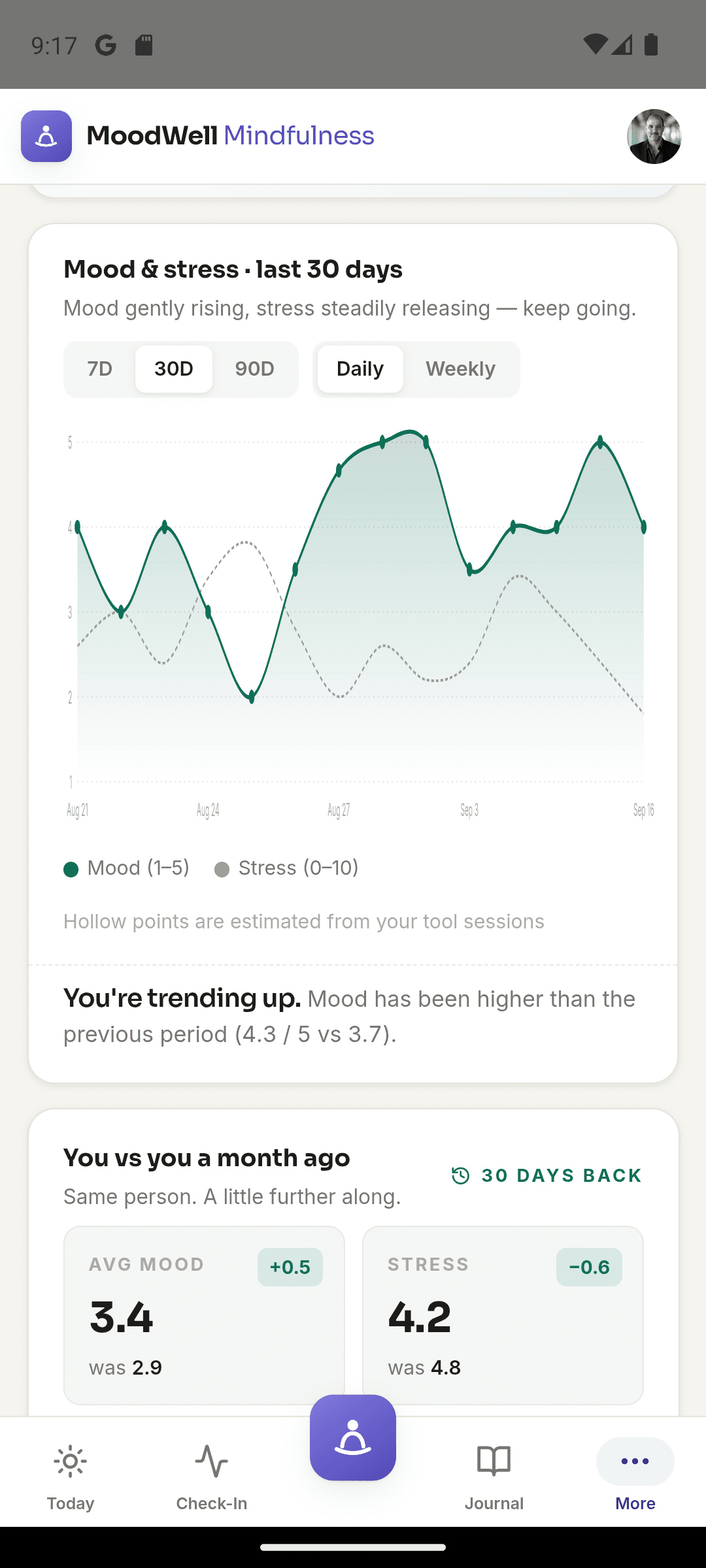
Return to what you recorded instead of relying on a general memory of the week.
View progressKeep longer entries available when you want to revisit a specific moment.
View journalingAdd another reflection to your routine when you want to pay attention to an encouraging moment or something you appreciate.
View Daily PositivityAcross your day
A check-in captures how you described the day. Your food diary, workout history, and planner keep the other details nearby. When you return to an entry about low energy or a busy evening, you can review the rest of that day instead of trying to reconstruct it from memory.
Go deeper
Build a short check-in you can repeat, know what to record, and use the history without turning it into another chore.
Read the guideSkip the pressure to write beautifully. Use a simple structure for your first entry and learn how to return to it later.
Read the guideLearn how to review mood records with curiosity, spot repeated context, and avoid mistaking a pattern for a cause.
Read the guideMoodwell
Choose Android or iOS to see the current release, beta, or waitlist option.
Questions, answered
Make the habit small enough to return to. A useful entry does not have to be long or happen every day.
Explore all FAQsNo. Choose a familiar cue, such as finishing lunch or closing your laptop, and make the entry small enough to repeat. If you miss a day, return with a fresh check-in instead of writing to fill the gap. The purpose is a useful reflection, not a perfect sequence.
Start with the time you can comfortably give it. A mood check-in and one sentence about the moment can be enough; a longer journal entry is optional. Try a short format for a few days, then adjust if you keep wanting more space.
Explore journalingNo. Mood check-ins and journal writing can form the whole routine. If you want another perspective on an entry, you can choose the journal's AI reflection action. AI usage draws from your credit allowance.
Look for specific details you recorded, such as repeated situations, changes in energy, or the language you used. A repeated pattern can give you a question to explore; it does not prove that one activity caused a mood change.