
A mood tracker for feelings, stress, energy and context.
Check in with your mood in Moodwell, record stress and energy, and add the context you want to remember. Review your mood history to see how your days have felt over time.
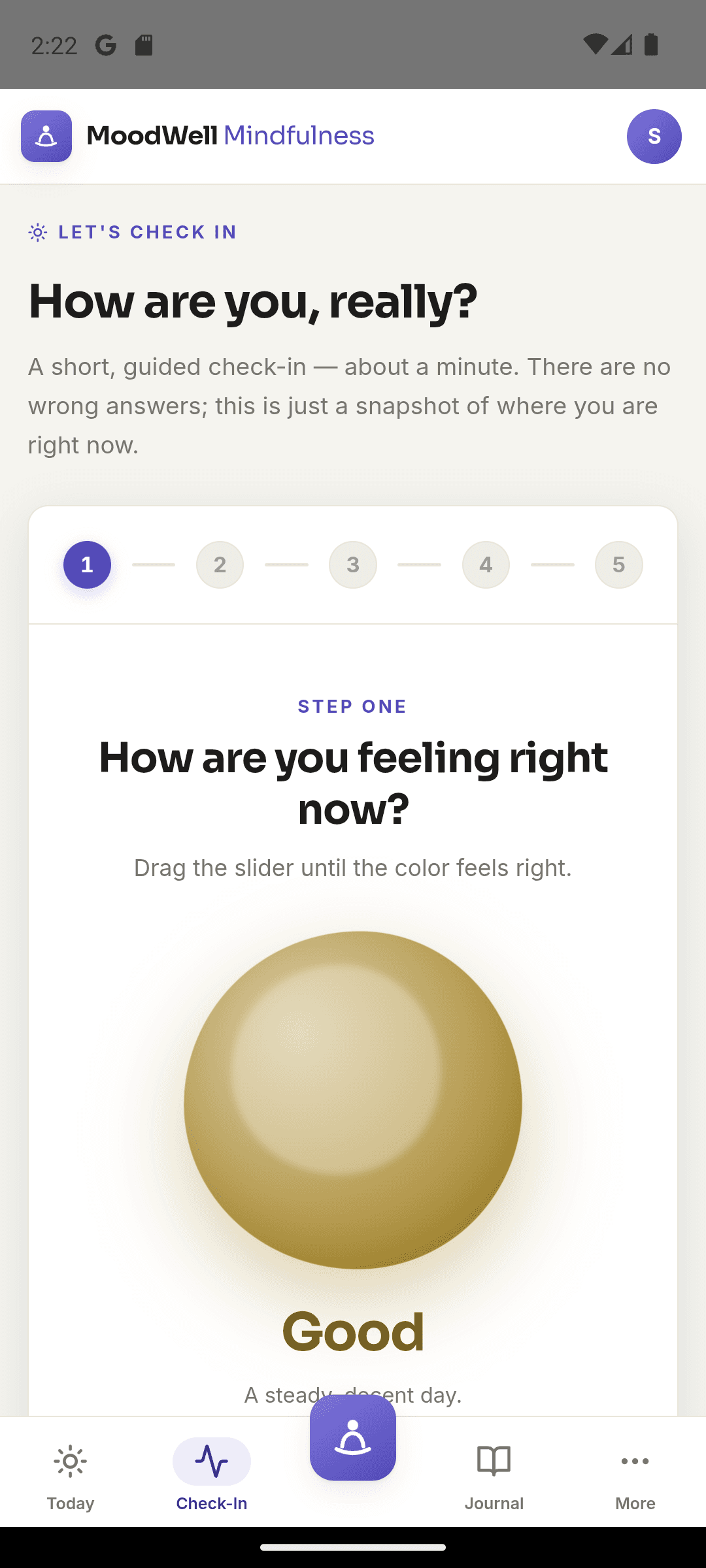
What it helps you do
What can you do with Mood tracker?
Start with a brief check-in
Choose the mood, energy and stress values that describe how you feel now.
Remember what was happening
Add an influence or note so a past rating has more meaning when you return to it.
Look beyond today
Use mood history and progress views to compare entries across your routine.
Step by step
How Mood tracker works
Record how you feel now
Choose a mood and rate your energy and stress. There is no right score to aim for.
Add an influence or note
Write the detail you would want to remember, such as a busy workday or a quiet morning.
Review mood history
Return to Progress to compare check-ins and read the context behind changes.
Inside the app · Mood tracker
Look back at how your days have felt.
Progress gives individual check-ins a longer view. Compare recorded mood, stress and energy, then return to the influences and notes that help explain what a day felt like to you.
- Record mood, energy and stress in a brief check-in.
- Add an influence or note to remember what was happening.
- Return to your mood history to compare entries over time.
- Read changes as personal observations, with the context you chose to record.
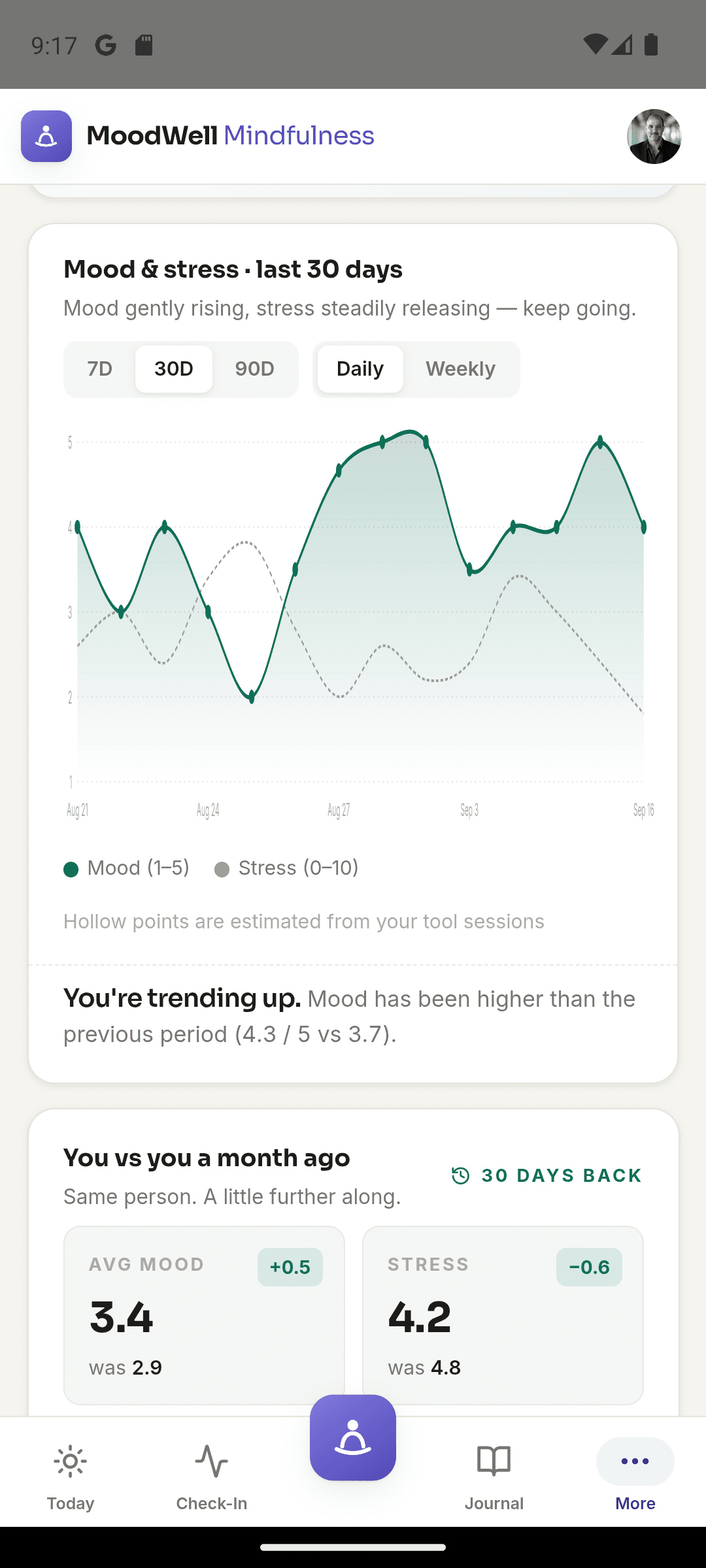
See check-ins beside the rest of your routine
Mood records can contribute to shared views alongside available movement and nutrition activity.
Before you start
Availability and things to know
Where you can use it
- Available on Android
- Available in the desktop web app
Things to know
- Mood tracking supports reflection; it does not diagnose a mental health condition.
Keep exploring
More in Moodwell Mindfulness.
Journaling
Write journal entries in Moodwell, attach a mood or context, and return to past reflections. When you want help exploring an entry, request an AI reflection on what you have written.
Guided conversations
Explore a difficult meeting, decision or recurring thought with a guided AI conversation in Moodwell. Keep the session together as you answer questions, reflect on what matters and consider a next step.
Guided Change
Set a personal goal in Moodwell Guided Change and record the moments that relate to it. Review attempts, setbacks and progress over time, with AI insights when you want help reflecting on your history.
Thought Reframe
Write a thought in Moodwell's Thought Reframe tool, rate how true it feels and choose the tone that fits it. Review alternative reframes, select one you can believe and receive AI support for your reflection.
Daily Focus
Moodwell Daily Focus turns a short check-in into an AI-generated plan for today. Share how you feel, the area on your mind and the quality you want to bring to it, then choose from three suggested focus actions.
Daily Positivity
Moodwell Daily Positivity starts with how the day feels, the kind of support you want and one honest observation. It creates an AI-guided reflection with three short activity ideas and a moment to pause and savor.
Wellbeing tools
Choose from Moodwell's wellbeing tools for breathing, emotional awareness, reflection, focus and gratitude. Browse by what you need, from a paced breathing exercise to a thought reframe or a small next step.
Get started with Mood tracker.
Choose a mobile platform to see its current release, beta, or waitlist option.
Questions, answered
Mood tracker, explained.
Keep a check-in brief, give it useful context, and know what your history can tell you.
Explore all FAQsWhat should I include if I only have a minute?
Record how your mood, stress, and energy feel now. Add an influence or a short note if it helps explain the moment, such as a busy commute or a quiet lunch. You do not need to write a full journal entry. A little context can make the check-in more meaningful when you return to it.
Where can I look back at my check-ins?
Open Mindfulness Progress to review recorded check-ins over time. Compare entries with their notes and circumstances instead of treating a single score as the whole story. The history reflects the moments you recorded, so gaps do not tell you how an unlogged day felt.
Can a mood tracker diagnose depression or anxiety?
No. Moodwell's mood records support personal reflection. They cannot diagnose a condition or establish why a feeling changed.