Week plan
Check the balance of high-effort and lighter days before the week begins.
View the plannerConsistency without perfection
Plan a manageable week, record what actually happened, and adjust your routine using your own history.
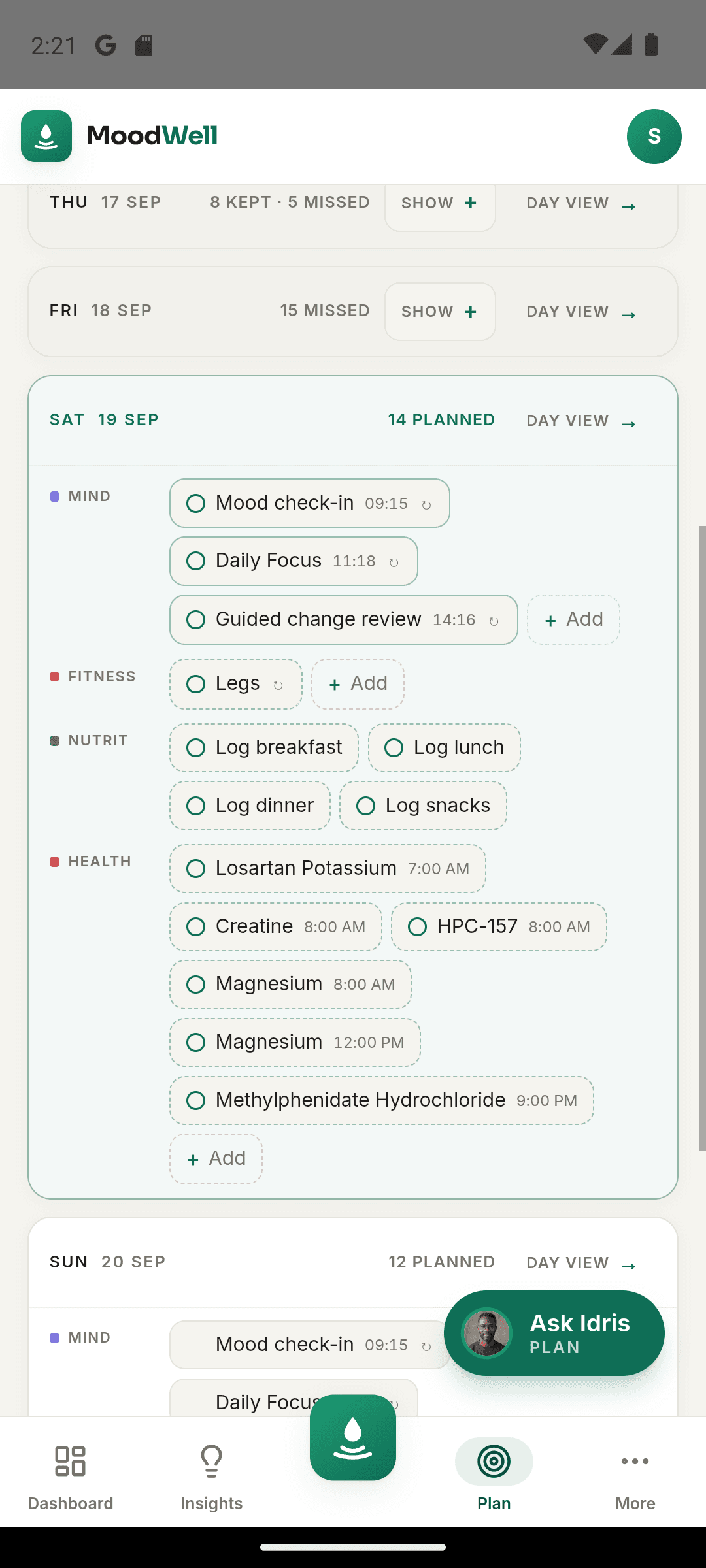
Use Moodwell's weekly planner to give workouts, meals, and personal commitments a place in your week. Record what you complete in the relevant layer, then compare the plan with your history. Adjust the next week around the times and activities you could actually keep.
The situation
You begin with good intentions, then a meeting moves, dinner changes, or your energy is lower than expected. A routine built as a rigid schedule can fall apart after one disrupted day.
Moodwell lets you keep the plan visible and record the day as it happened. The next week can reflect your real capacity instead of the ideal version of it.
Step by step
Start with a small pair, such as a lunchtime walk and an evening mood check-in. Choose times you already recognize in your day.
See how Moodwell worksAdd fixed commitments first, then place workouts, meals, and wellbeing actions around them.
Explore the plannerLog the completed activity and edit the plan when the day changes.
See daily insightsReview workout history and check-ins. If an evening plan keeps slipping, try a different day or a shorter commitment. Keep the changes specific enough to try next week.
See progress viewsA practical example
Plan two workouts, a few meals, and an evening check-in. Put the workouts on the days with the clearest gaps instead of filling every free evening. In Daily Focus, write a specific intention such as 'Take a lunch break away from my desk.'
If Tuesday's meeting runs late, move the workout to Thursday in the planner. Log Thursday's session when you finish it. At the weekend, review what happened and keep the parts that fit. The record still tells a useful story when the original schedule changes.
Inside Moodwell
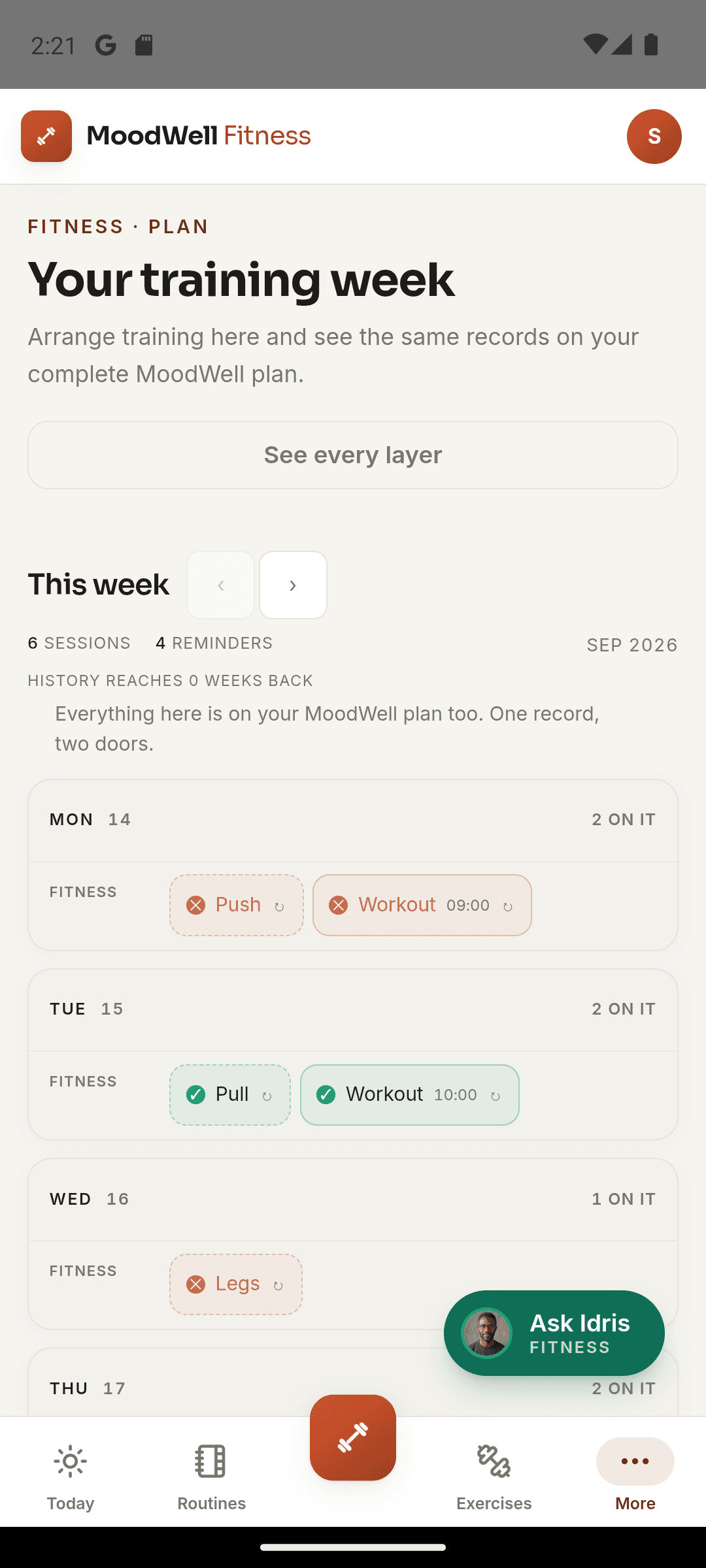
Check the balance of high-effort and lighter days before the week begins.
View the plannerChoose one intention that can guide the next useful action.
View Daily FocusNotice repetition while keeping missed days in proportion.
View the dashboardAcross your day
The weekly plan shows what you intended to do. Workout logs, meals, check-ins, and dose history show what you recorded. A Thursday workout that replaced Tuesday's plan is still part of your training history, so you can plan the following week around what worked.
A streak can mark repetition, but it is not a score for your health or effort. Resume the routine at the next useful point.
Go deeper
Bring workouts, meals, health schedules, and personal commitments into one realistic view of the week.
Read the guideBuild a short check-in you can repeat, know what to record, and use the history without turning it into another chore.
Read the guideCreate a short morning sequence that checks your current state, names one priority, and leaves room for the day to change.
Read the guideMoodwell
Choose Android or iOS to see the current release, beta, or waitlist option.
Questions, answered
A useful routine has room for missed days and changing plans. Here is how to keep the week manageable.
Explore all FAQsStart with today. Record what is useful now and choose a manageable next action; there is no need to reconstruct every missed entry. When you review the week, distinguish between something you did not record and something you did not do.
Put fixed commitments in first, then add a few realistic actions around them, such as two workouts or a meal you want to prepare. Leave room for changes. A planner is more useful when it represents a week you can actually attempt than when every gap is filled.
See how the planner worksYes. Move or edit planner commitments when your week changes. Record completed workouts and meals in their own trackers; a plan describes your intention, while the log records what happened.
Start with three questions: Which planned activities happened? Which repeatedly moved or went unfinished? What is one change that would make next week easier? Your planner and activity history give you a record to work from.