Journal entry
Keep the facts and your private reactions in one place before deciding what to say aloud.
View journalingBefore an important conversation
Organize the facts, name what matters, and plan a clear opening while leaving room for a real exchange.
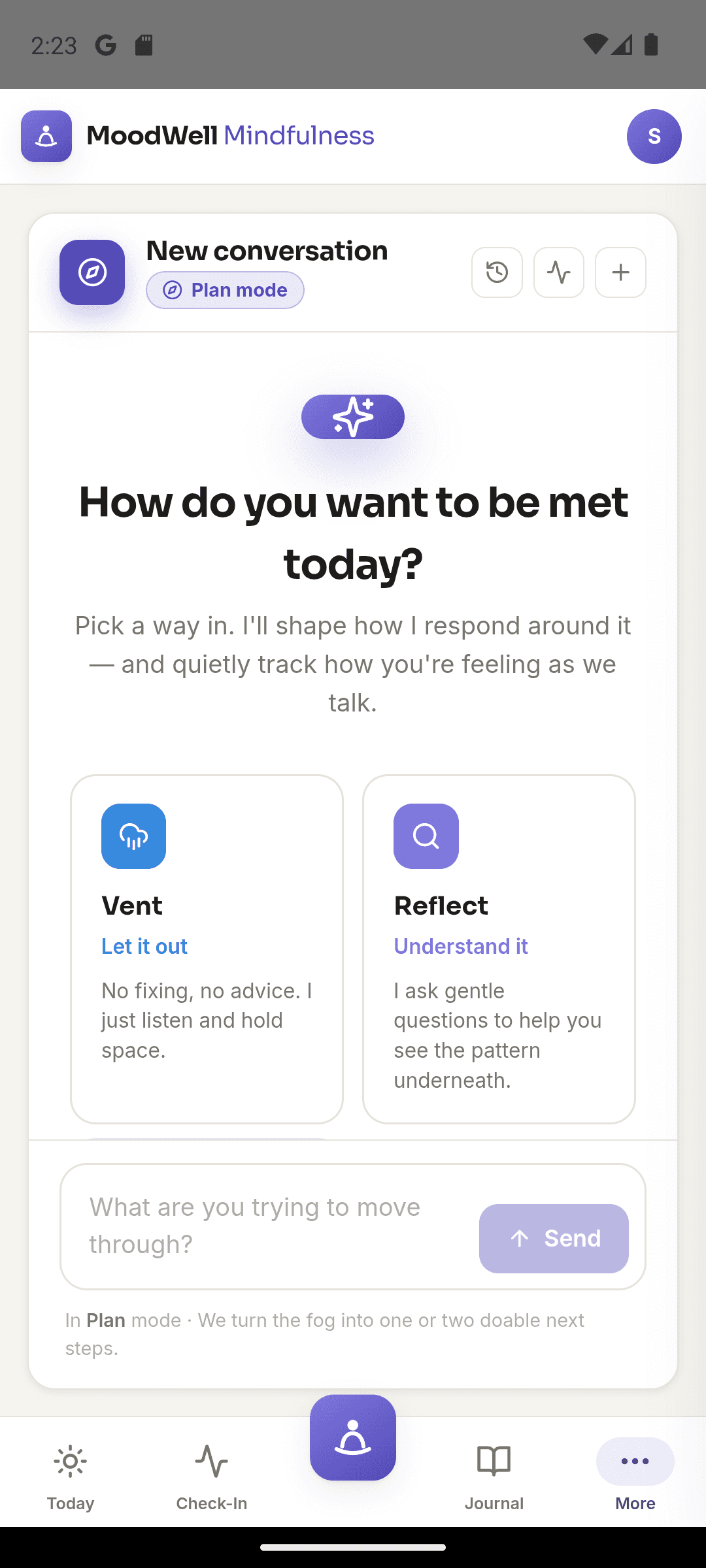
Use the journal to separate what happened, how you felt, and what you want to ask. Thought Reframe can help you examine assumptions about the other person's response. A guided conversation can help you explore your purpose, then you can draft an opening in your own words before speaking to them.
The situation
Preparing can turn into rehearsing every possible response. That may increase anxiety without helping you say the first clear sentence.
Moodwell can help you separate the event, your interpretation, what you need to communicate, and the part you cannot control. The other person's response remains their own.
Step by step
Describe what happened without assigning motives you cannot verify.
Use the journalUse Thought Reframe if predictions or assumptions are making the conversation feel fixed in advance.
Explore Thought ReframeDecide what you need to express, ask, learn, or set as a boundary.
Explore guided conversationsWrite one direct opening and one question, then choose an appropriate time and setting.
Set a conversation focusA practical example
In your journal, separate the event from the interpretation. Event: 'The task was not finished by Friday.' Interpretation: 'They do not respect my time.' Then write what you need: a clearer handoff and a date you can plan around.
Your opening might be, 'The task was still open on Friday, and I could not finish my part. Can we agree on a new date and how to flag a delay?' Use Thought Reframe if the interpretation keeps taking over, or a guided conversation to explore the question. Review any AI wording so it reflects your facts and your voice.
Inside Moodwell
Keep the facts and your private reactions in one place before deciding what to say aloud.
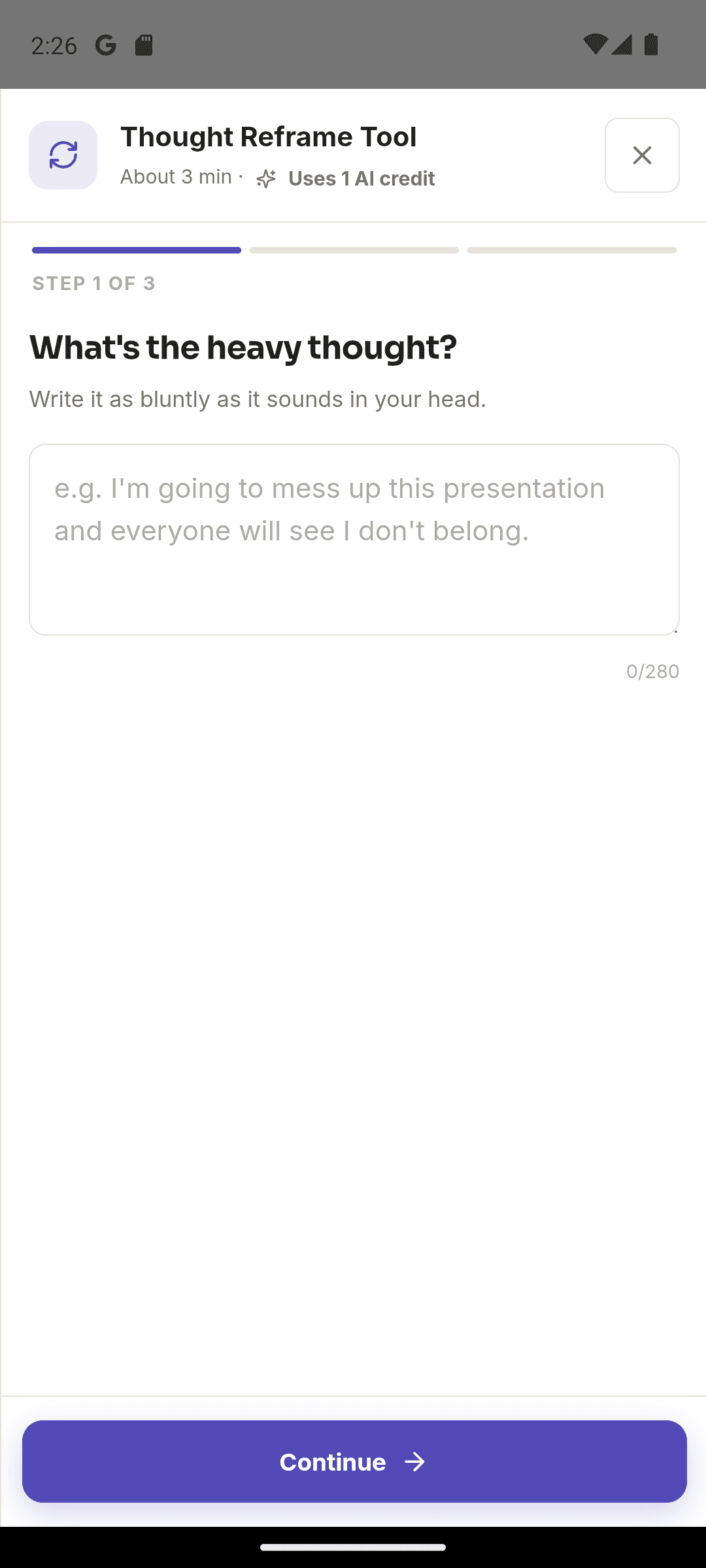
View journalingTest assumptions about what the other person thinks or how the conversation will go.
View Thought ReframeAsk for possible questions or a concise summary, then edit the output into your own voice.
View guided conversationsAcross your day
Once you know the purpose and opening, add the conversation or preparation task to the day. Keep the private journal entry separate from what you decide to share.
AI can misunderstand tone, relationships, and risk. Do not use its output as legal, workplace, medical, or safety advice.
Go deeper
See how a thought reframe can widen your view of a difficult situation without asking you to pretend everything is fine.
Read the guideSkip the pressure to write beautifully. Use a simple structure for your first entry and learn how to return to it later.
Read the guideUnderstand where an AI wellbeing tool can help, where it can be wrong, and when a person or professional should take the lead.
Read the guideMoodwell
Choose Android or iOS to see the current release, beta, or waitlist option.
Questions, answered
Prepare what you want to say, keep assumptions in check, and decide what belongs in the actual conversation.
Explore all FAQsYou can ask the AI coach for wording or questions to consider. Give it the facts you want to discuss and the purpose of the conversation, then review its response. Edit the wording into your own voice and remove assumptions about the other person.
No. It can help you consider possibilities, but it cannot know another person's response.
Prioritize safety and seek appropriate personal, workplace, legal, professional, or emergency support before proceeding.
That is your choice. A journal entry can be a place to sort out thoughts you are not ready to share. Before the conversation, choose the facts, request, or boundary you actually want to communicate. You do not need to show the full entry or an AI-generated draft.