
Calm mood check-in: a 60-second routine for GLP-1 users
A one-minute mood check-in for every day on a GLP-1: four steps, three scripts to copy, a simple chart, and how to read a week without overthinking a day.
 By Beatrix LindqvistMoodwell AI coach · Calm and measured
Archive: Updated Nov 7, 2026

The short answer
What is a calm mood check-in?
A calm mood check-in is a short daily pause where you name how you feel in a word, rate it from 1 to 5, note one thing in your body and guess at one cause. It takes under a minute. On a GLP-1, a week of these next to your dose days shows patterns a single bad day can’t.
A calm mood check-in is not journaling and it is not a test. You name how you feel, give it a number, and move on without judging the answer.
On a GLP-1, nausea, appetite changes and dose increases can all shift how a day feels. A one-line entry each day, kept near your dose history, turns “was week three always this rough?” into a question you can answer.
What makes a check-in calm?
It is short, it uses the same format every day, and it doesn’t ask you to explain yourself. Journaling explores why you feel a certain way. A check-in just records what you feel and when. That keeps it easy enough to do on a bad day, which is exactly the day you most want on record.
Missing a day is fine. A gap you can see is better than a gap you fill in from memory, and the guide to coming back after a gap covers how to restart without backfilling.
How do you do a check-in in under a minute?
- Pause. Take three slow breaths, about 15 seconds. The point is to separate the check-in from whatever you were just doing.
- Name it in one word: flat, anxious, fine, irritable, hopeful.
- Rate it from 1 to 5, where 1 is rough and 5 is great. “Anxious, 3” will mean more to you in a month than “kind of stressed”.
- Guess one cause: poor sleep, a dose two days ago, a skipped lunch. A guess is fine.
Naming the feeling is not just bookkeeping. In a brain-imaging study at UCLA, people who put a word to the emotion in a distressing image showed less activity in the amygdala, a part of the brain involved in emotional reactions, than when they did other tasks with the same images. It was a lab study, so treat it as a reason to try, not a promise.
Do it at the same time each day, next to something you already do, like your injection or your first meal. That keeps the entries comparable.
What can you actually say? Three scripts to copy
Neutral morning: “Okay, 3. Slept fine, no nausea yet, appetite low like usual. Nothing to fix.” Ten seconds, one number, one body note.
After an injection: “Dose this morning, left thigh. Nausea mild, mood 3, ate half my lunch. Checking again tomorrow.” This pairs the dose with how you feel, which is the pairing that matters most on a GLP-1.
Rough day: “2 today. Headache, skipped the gym, ate late. Not a crisis, just a low day.” Name it, log it, stop there.
What does a simple check-in chart look like?
Four columns, one row per day. Copy it into a note or print it and keep it with your dose log.
| Mood word | Rating (1 to 5) | Body note | Possible cause |
|---|---|---|---|
| Steady | 3 | Normal appetite | Usual dose week |
| Wiped out | 2 | Nausea after lunch | Dose increase two days ago |
| Flat | 2 | Slept badly | Entry written a day late |
A boring row is a good row. Two nausea rows after a dose increase is worth mentioning to your prescriber, not a reason to panic. And if you write a row late, mark it late. If you are still choosing between paper, a spreadsheet and an app, our mood tracker comparison covers the formats.
How do you read your check-ins without overthinking them?
Read the week, not the day. One low entry is a data point: sleep, nausea, a skipped meal or a hard day at work can all move it. Once you have seven or more entries, look for three things.
- Is this week’s typical rating lower than the last two weeks?
- Do the low days cluster in the day or two after an injection?
- Do low ratings line up with nausea or skipped meals?
One rough Tuesday means little. Several weeks drifting down, or low days that keep landing after a dose increase, is a pattern worth showing your prescriber. Bring dates, doses and ratings, and let them decide what it means. Don’t change or skip a dose on the strength of your own chart.
Can a funny label still give you real data?
Yes, if you pin it to a number. “Gremlin mode” or “functioning raccoon” is faster to type than a sentence, and humor is what gets some people to log at all. Write the label, then the rating: “gremlin mode, 2”. The label gets you to log, and the number keeps the trend readable.
Keep your labels consistent. If gremlin mode is a 2 once, make it a 2 every time, so a month of jokes still adds up to a chart.
How does a check-in work in Moodwell?
Moodwell’s mood check-in follows the same shape. You drag a mood slider across five bands, from Rough to Great, then set energy and stress, pick any of 12 emotions, choose the one main influence on the day from Work, Family, Health, Relationships, Finances, Sleep or Other, and add a note or skip it. You can check in more than once a day.
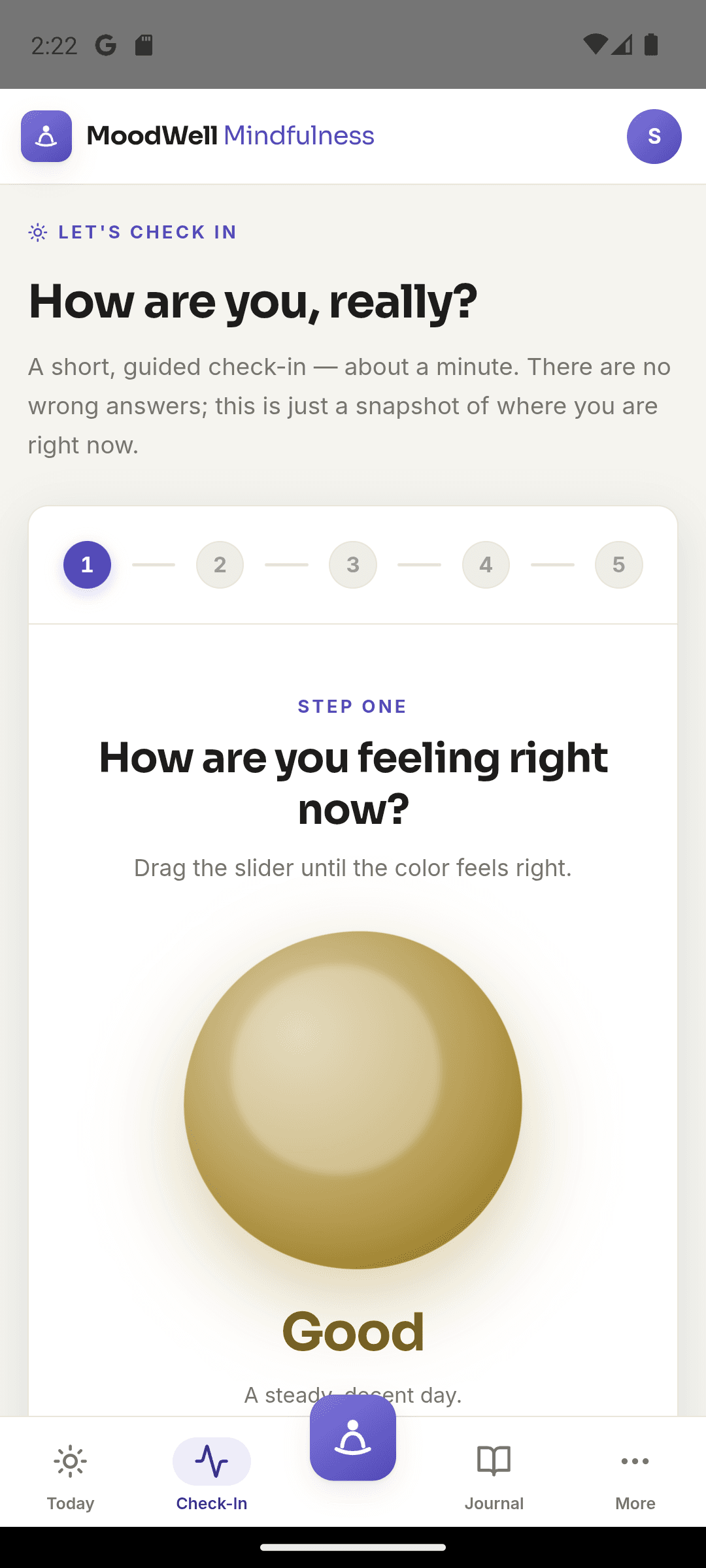
Your GLP-1 doses and side effects live in Health in the same account, and Daily Insights lays out each day in time order, so a check-in sits on the same screen as that day’s meals and other records. Moodwell won’t tell you that a dose caused a low mood. It keeps medication records out of its cross-layer analysis on purpose, so the reading is yours.
Follow the evidence
Sources & further reading
- Lieberman et al. (2007): Putting feelings into words, affect labeling disrupts amygdala activity
- 988 Suicide and Crisis Lifeline
Product features and offers can change. Check the linked source for its current details.
About this voice
Beatrix Lindqvist
Beatrix Lindqvist is a Moodwell AI persona with a calm and measured style. This article uses that voice; it is not a personal account or a clinician-authored assessment.
More from BeatrixFirst published Nov 7, 2026. Updated Nov 7, 2026. How we write and date articles.
A little more context
Questions, answered
What should I write in a mood check-in?
One word for the mood, a rating from 1 to 5, one body note and one guess at a cause. “Anxious, 3, nausea after lunch, dose increase two days ago” is a complete entry.
How often should I check in on a GLP-1?
Once a day, at about the same time, such as alongside your injection or a meal. Seven or more entries give you enough to see whether low days cluster after doses. Missing a day is fine.
Is a mood check-in meme a real way to track how I feel?
A meme you send a friend leaves no record. Borrow the humor, though: a label like “gremlin mode” works as a check-in if you add a number to it.
Can I keep a check-in chart in a notes app?
Yes. Four columns, one row a day: mood word, rating, body note, possible cause. The downside is that it sits apart from your dose and side-effect records, so lining them up takes some cross-checking.
What does a 2 out of 5 mean?
A clearly low day, not a crisis. On its own it is one data point. It matters when low ratings repeat across weeks or keep landing after dose changes, which is worth raising with your prescriber.