
Mood tracker: printables, spreadsheets and apps compared
Paper, spreadsheet, coloring grid or app: how to pick a mood tracker you will keep, the six fields worth recording, and a 15-minute monthly review.
 By Yuki TanakaMoodwell AI coach · Quiet and precise
Archive: Updated Oct 29, 2026

The short answer
What is the best mood tracker?
The best mood tracker is the one you will still fill in after week three. Paper suits low effort, a spreadsheet suits control, an app suits reminders and charts, and a coloring grid suits days when typing is the barrier. Whatever the format, record six fields: time, mood, sleep, dose events, side effects and a one-line note.
Most mood trackers die of friction, not of bad design. This piece compares four formats by how much they ask of you each day, gives a worked layout for each, and ends with a short monthly review that turns a month of entries into one change worth trying. It is written with GLP-1 users in mind, because dose days add a pattern worth watching.
Key takeaways
- Choose the format you will keep: printables for low effort, spreadsheets for control, apps for reminders and charts, coloring grids for the days when typing is too much.
- A minimum useful entry has six fields: date and time, mood rating, sleep, dose events, side effects and a one-line note.
- Keep daily entry under 30 seconds. A long entry is the one you skip.
- Coloring trackers are the easiest to keep but the hardest to review against dose history.
- Once a month, spend 15 minutes looking for mood dips near injection days, then change one thing.
What is a mood tracker and what should you record in one?
A mood tracker is a record of how you feel over time, kept next to the few facts that explain it. For someone on a GLP-1, that means mood sits beside dose events, side effects and food rather than in a separate journal you never compare against anything.
Six fields are enough: date and time, a mood rating, hours slept, any medication or dose event, side effects, and a one-line note. Clinicians have long used the same idea for mood disorders. The National Institute of Mental Health suggests keeping a life chart or mood journal to help recognize mood swings, and a life chart puts mood, sleep, treatment and events on one page.
The context matters more than the score. A 2 out of 5 the day after an injection, on five hours of sleep and a skipped lunch, tells you something. A bare 2 out of 5 tells you nothing at review time.
When is a printable mood tracker better than an app?
Paper wins when you want zero friction and no new login. If you already juggle a dose tracker, a food app and a journal, a monthly grid on the fridge records how you feel without adding a subscription or another sync to keep an eye on.
To set one up, draw a 31-row grid with three columns: mood from 1 to 5, side effects, and a one-word note. Pin it where you inject or beside your bed. What paper cannot do is the math. If you want mood lined up against doses and food without copying anything, an app is the better fit.
How do you build a mood tracker spreadsheet you will keep filling in?
A spreadsheet gives you full control of your data and costs nothing. The trade is effort: nothing reminds you and nothing charts itself unless you build it. Keep the daily sheet small, because every extra column is another reason to skip a day.
| Column | Format | Why it earns its place |
|---|---|---|
| Date | Auto-filled | No effort |
| Mood | 1 to 5 | One number, no deliberation |
| Side effects | Short text or a code, N for nausea | Fast on dose days |
| Dose taken | Y or N | Lines mood up with dose days |
| Protein, % of target | Number | Shows under-eating on rough days |
| Sleep hours | Number | The most common confounder |
| Note | Optional | One sentence at most |
Use one tab per month: headers in row 1, days in rows 2 to 32. Add a summary row with =AVERAGE(B2:B32) for mood and =COUNTIF(D2:D32,"Y") for doses logged. Conditional formatting that turns 1 and 2 one color and 4 and 5 another lets you see the shape of the month without reading a cell.
To keep entry under 30 seconds, set a phone alarm at a fixed time and fill only Mood and Side effects by default. Leave the rest blank unless something changed, and copy protein from your food app once a week rather than every day. If you miss more than three days in a week, that is the sign to try a different format.
How does a coloring mood tracker work and who is it for?
A coloring tracker is a grid of shapes, one per day, that you fill with a color for your mood. Five colors are plenty, say blue for low, gray for flat, green for steady, yellow for up and red for rough. It takes ten seconds and asks for no words and no decisions.
It suits you if typing is the barrier, for example during a dose change or a week of side effects when everything else already wants your attention. A wall of blue before your injection day is visible at a glance. The limit is review: you cannot count it, chart it or line it up against dose history and weight. Treat it as the fallback for weeks when anything more feels like too much.
What makes a good bipolar mood tracker?
A general mood tracker asks how you felt today. A bipolar tracker also has to show where you are in a cycle, so it needs more fields: elevated or low state, hours slept, whether medication was taken as prescribed, anxiety, and triggers such as stress, travel or missed meals. Use a rating scale your clinician recognizes rather than emoji.
Episodes are defined by how long symptoms last, not by single days. The American Psychiatric Association describes a manic episode as lasting at least a week, hypomania at least four days in a row, and a depressive episode at least two weeks. A tracker filled in daily, with sleep and state on every row, lets a clinician scan a month and see where an episode may have started and ended. Reading that is their job, not the tracker’s.
Which features separate a good mood tracker app from a basic one?
Judge an app on four things: whether it reminds you to log, whether mood sits beside your other records (food, doses, sleep), whether you can take your history with you, and what it costs per year. Mood diaries like Daylio make the daily check-in quick. Bearable records a wider set of symptoms, factors and medications, with correlation reports in its paid plan. Our Bearable vs Daylio comparison goes through both in detail.
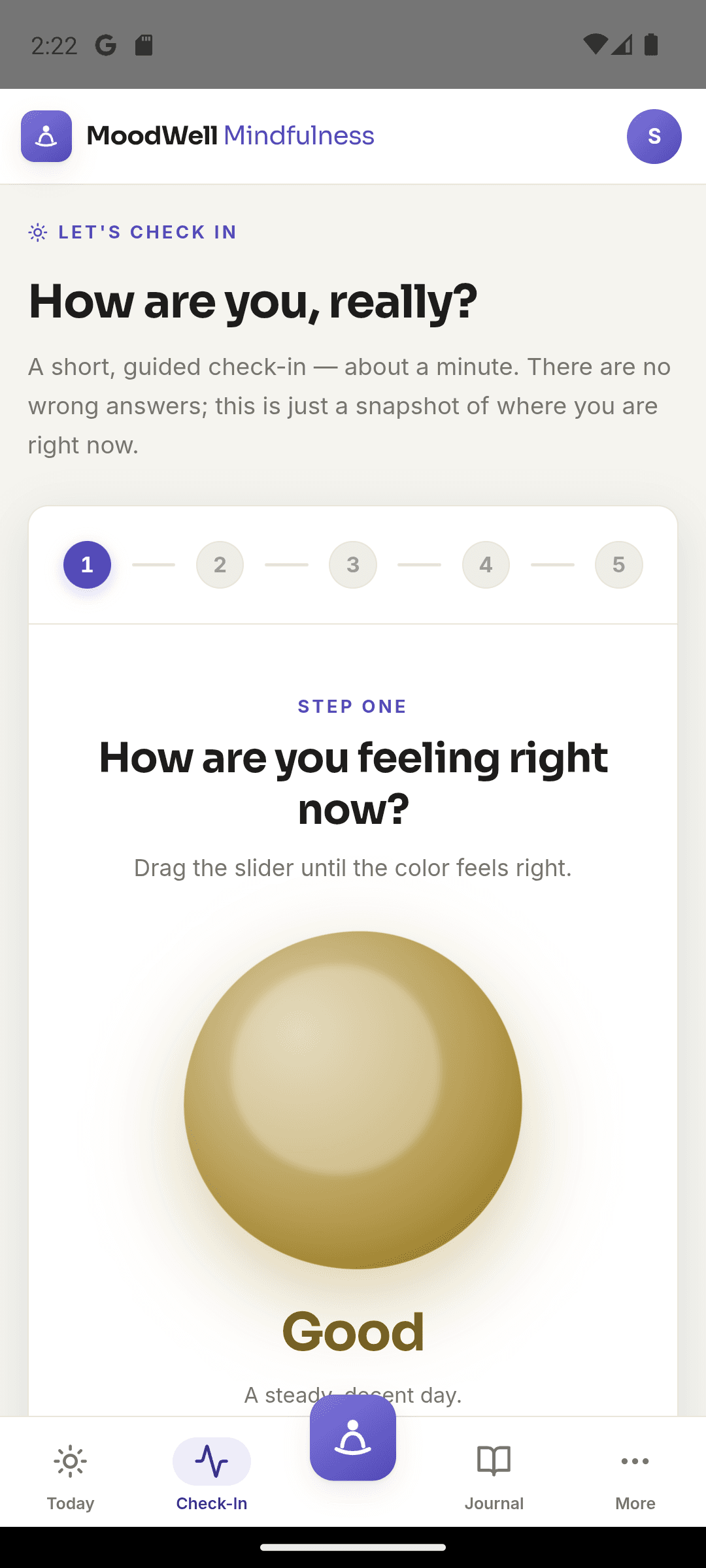
Moodwell’s mood check-in takes about a minute: a mood slider, energy, stress from 0 to 10, any emotions that fit, the single biggest influence on the day (sleep is one of the options) and an optional note. Doses, symptoms and weight live in Health in the same app, and you can bring existing history across with a one-time Shotsy file import. Steps, sleep, workouts and weight can come in from Health Connect on Android.
How do you review a month of mood data and act on it?
Set aside 15 minutes once a month. Put your mood record next to your dose history and side-effect log and look for three things: dips within two or three days of an injection, days where low mood and short sleep arrive together, and weeks where gaps in food logging line up with a slump. Write down one pattern, not five, and change one thing for the next month. If the pattern involves your dose or side effects, the change is a conversation with your prescriber, not an adjustment you make yourself.
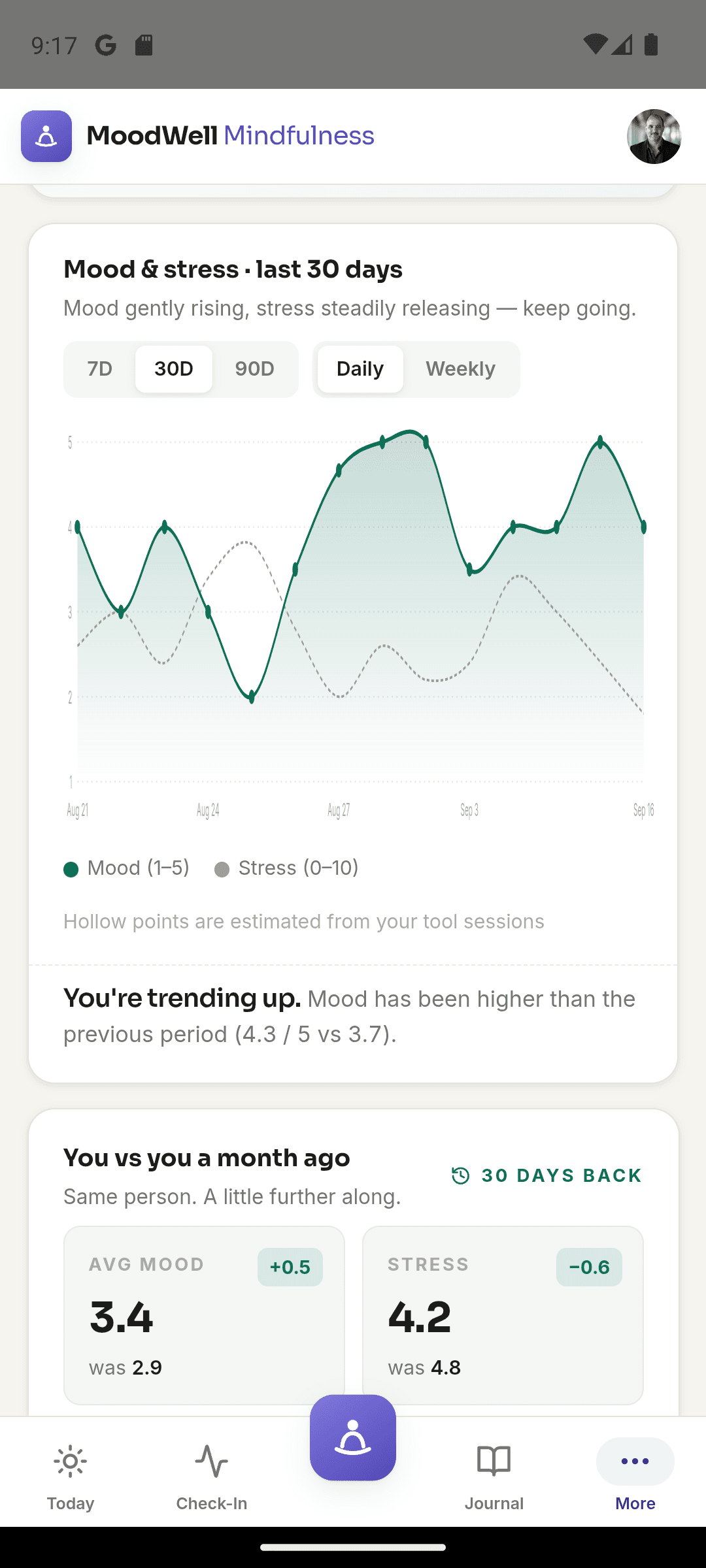
A worked example. Your tracker shows mood at 2 out of 5 on the two days after each weekly dose and 4 out of 5 the rest of the week. Your side-effect notes list nausea on those same days, and your food diary shows about 800 calories logged. The likely pattern is not that the medication makes you sad. It is that nausea days are under-eating days, and under-eating drags mood down. One change: plan three easy, high-protein foods you tolerate for the day after a dose, and see whether the dip shrinks next month.
Follow the evidence
Sources & further reading
- NIMH: Bipolar disorder
- American Psychiatric Association: What are bipolar disorders?
- 988 Suicide and Crisis Lifeline
Product features and offers can change. Check the linked source for its current details.
About this voice
Yuki Tanaka
Yuki Tanaka is a Moodwell AI persona with a quiet and precise style. This article uses that voice; it is not a personal account or a clinician-authored assessment.
More from YukiFirst published Oct 29, 2026. Updated Oct 29, 2026. How we write and date articles.
A little more context
Questions, answered
What is the best mood tracker if I already use several health apps?
Either the lightest format or the one that replaces a log. A paper or coloring grid adds nothing to maintain. An app that keeps mood, doses and side effects in one place can replace a separate journal instead of adding to the pile. The deciding question is which single entry you will actually complete each evening.
How long should I keep a mood tracker before looking for patterns?
Give it a full month, then run the 15-minute review: dips within two or three days of an injection, low mood alongside poor sleep, and weeks where skipped meals match a slump. A weekly dose gives you four cycles a month, which is the minimum for a pattern worth testing. Make one change and compare the next month.
Can I use a mood tracker spreadsheet and an app at the same time?
You can, but you probably shouldn’t. Two logs means filling one in from the other, and entries filled in from memory are where honest data goes missing. Pick one: a spreadsheet for control and no subscription, an app for reminders and charts. One record, filled daily.
Are free mood tracker templates good enough?
For most people, yes. A paper grid with mood, side effects and a one-word note costs nothing and works if you fill it at a fixed moment like injection time or bedtime. Paying makes sense when you want charts drawn for you or mood kept beside dose and food records without copying.
Can a mood tracker tell me if I have depression or bipolar disorder?
No. A tracker records what you noticed, and a clinician decides what it means. Its value is that a month of dated entries is far easier to discuss in a short appointment than a sense that you have felt off lately.