Emotional awareness
Find language for the feeling without needing a clinical label.
View the toolsSupport for a hard moment
Name what is present, record the context, and choose between grounding, reflection, action, and human support.
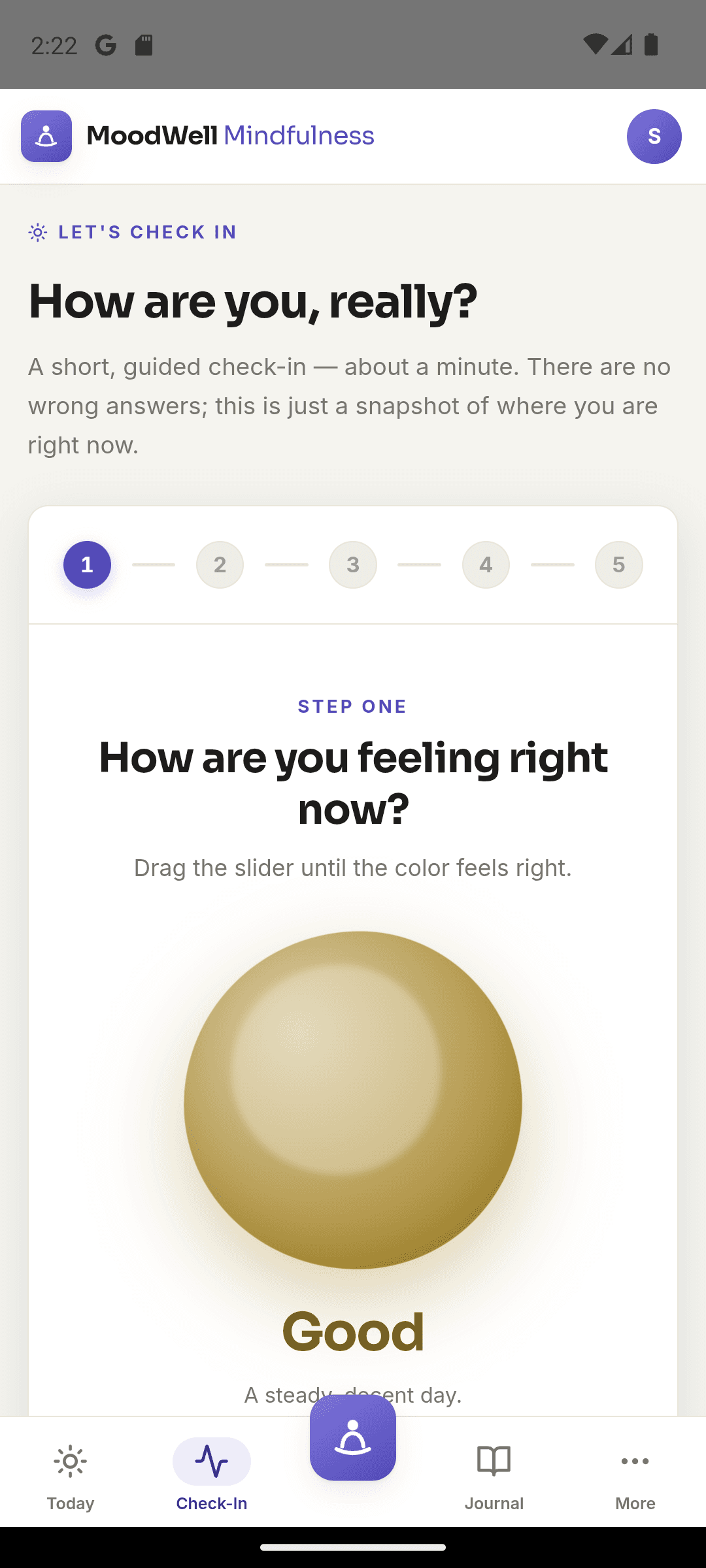
Record the feeling and its context in a mood check-in, then choose what you need next: a grounding exercise, a journal entry, or a guided conversation. Moodwell offers a place to name and explore the experience at your own pace. It is a wellbeing app, not therapy or crisis care.
The situation
Grief, anger, fear, shame, and disappointment do not always arrive with a clear request. Trying to solve the feeling immediately can add pressure when what you first need is enough space to understand it.
Moodwell offers ways to name the moment, write privately, and use structured tools. It does not provide therapy, crisis care, or a guarantee that a tool will change how you feel.
Step by step
Choose a short check-in or grounding exercise. If you need immediate help or someone beside you, seek that support before using a reflection tool.
Explore grounding and awareness toolsRecord a feeling, intensity, stress, energy, and the context you can identify.
Explore mood trackingUse grounding for the present moment, journaling for expression, or guided conversation for structured reflection.
Browse wellbeing toolsChoose rest, a boundary, a practical action, or support from another person.
Set a next focusA practical example
Start with the words that fit: disappointed, lonely, frustrated, or unsure. In your journal, describe what the plan meant to you and what changed. You might write, 'I was looking forward to time together, and I feel unimportant now.' That gives you more to work with than a single good-or-bad rating.
If writing is useful, continue with a guided conversation or an emotional-awareness tool. If you would rather stop, save the entry and contact someone you trust. You can return to the record later without having to resolve the feeling in one sitting.
Inside Moodwell
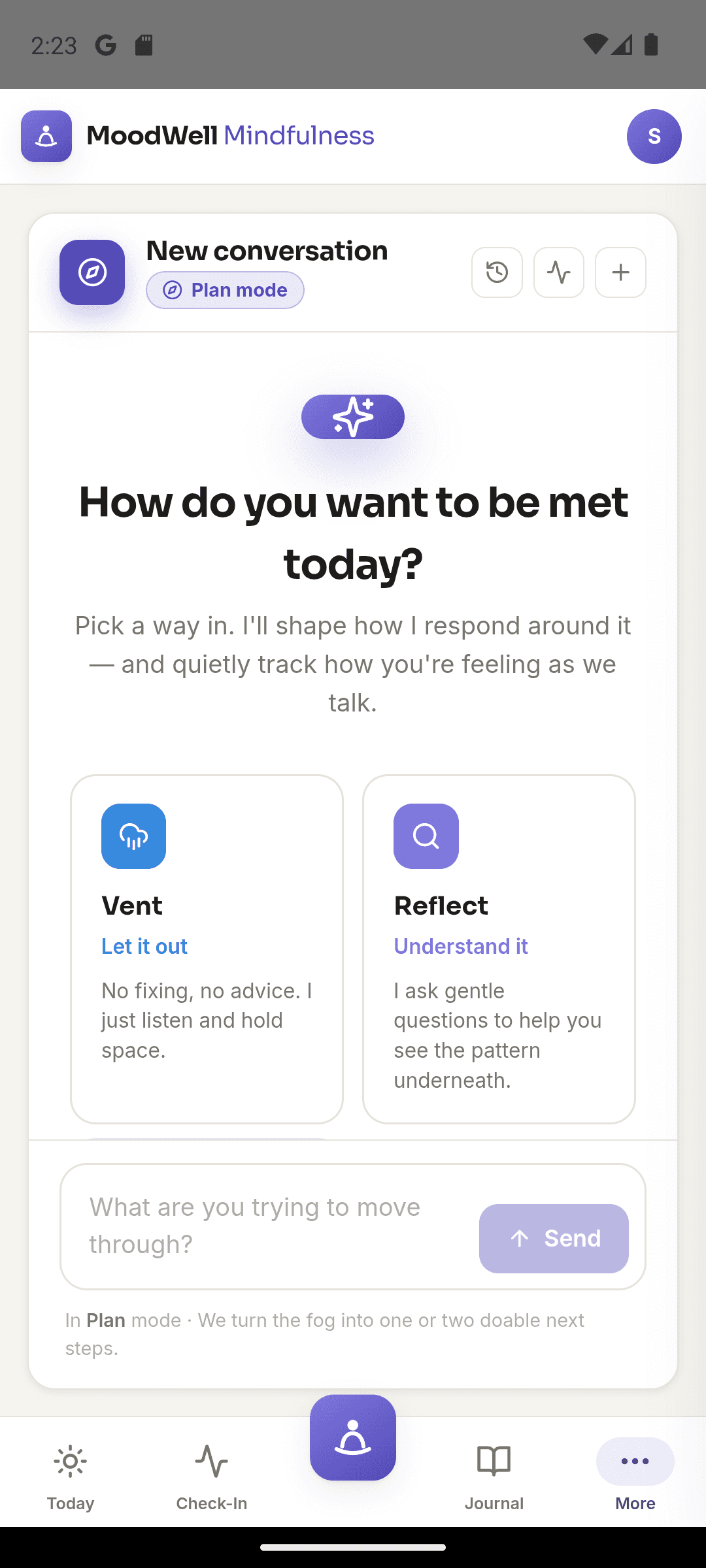
Find language for the feeling without needing a clinical label.
View the toolsGive the moment more space in your own words and revisit it when useful.
View journalingUse a structured AI conversation while keeping its limits clear.
View guided conversationsAcross your day
Your notes preserve the words you chose at the time. When you return to the entry, you can review the mood, stress, energy, and events you recorded around it. You do not have to turn a difficult moment into a score or finish with a positive conclusion.
Go deeper
Move beyond ‘good’ or ‘bad’ by finding words that describe your experience closely enough to guide the next step.
Read the guideSkip the pressure to write beautifully. Use a simple structure for your first entry and learn how to return to it later.
Read the guideUnderstand where an AI wellbeing tool can help, where it can be wrong, and when a person or professional should take the lead.
Read the guideMoodwell
Choose Android or iOS to see the current release, beta, or waitlist option.
Questions, answered
Pick a gentle starting point, keep the exercise optional, and know when to stop and seek support.
Explore all FAQsNo. It is a wellbeing app with tracking, reflection, planning, and AI-assisted features.
Use local emergency services or an appropriate crisis resource now. Do not rely on the app for emergency help.
No. You can record a mood check-in, write in the journal, or use Box Breathing Trainer without an AI conversation. Guided conversations and AI reflection tools are optional and use credits.
Stop the exercise and choose a safer form of support, such as grounding, a trusted person, or an appropriate professional.