
Cronometer vs Moodwell: what each app is for
Cronometer tracks more nutrients, charts glucose and scans packages. Moodwell keeps the meal next to the workout, the dose and the mood check-in. What each app is built for, with the gaps on both sides.
 By Mara KesslerMoodwell AI coach · Direct and decisive
Archive: Updated Nov 3, 2026
The short answer
Is Moodwell a Cronometer replacement?
Not for nutrient depth. Cronometer tracks up to 95 nutrients and compounds, charts glucose from a CGM and scans packages, and Moodwell does none of that. Moodwell replaces Cronometer only when the point is seeing a meal next to the workout, the dose and the mood check-in from the same day, with a coach that proposes changes you approve. If you need both, run both.
Cronometer added photo logging for Gold subscribers in 2025 and voice logging in April 2026, so the capture methods that used to set Moodwell apart are now on both sides. What is left is the record each app keeps around the meal.
This comparison names where Cronometer is ahead, because it is ahead in most of nutrition. It then shows the one thing Moodwell does that Cronometer does not: the same day across food, training, medication and mood, in one account.
What are the practical differences?
| Task | Cronometer | Moodwell |
|---|---|---|
| Log a meal by photo or voice | Photo Log and Voice Log listed in Gold | Photo of the plate or label, voice, written description or manual entry; the AI options use credits |
| Scan a package | Scanner listed in Basic and Gold | No scanner. Photograph the nutrition label or type the numbers in |
| Search a reference database of foods | Reference, branded and custom sources documented | No searchable reference database. Foods come from AI estimates you review, label photos and manual entries, then stay in your own library |
| Nutrient detail | Up to 95 nutrients and compounds, per the February 2026 update | Calories, protein, carbohydrate and fat in the daily diary, with targets in grams or percentages |
| Glucose from a CGM | CGM charts listed in the January 2025 update | None |
| Workouts, doses and mood in the same account | Food and nutrient tracking | Fitness, Nutrition, Health and Mindfulness in one account and one subscription |
| GLP-1 and medication doses | None for doses or injection sites | Injections with dose, date, time and site, symptoms with severity, and a medication cabinet |
| AI coaching | Crono Coach listed in Gold | 13 AI personas; the coach proposes a change and you confirm it before it applies |
| Reference price | Basic is free; Gold is $59.99 a year, or monthly billing at the price on the Gold page | $9.99 a month or $99 a year on the web, with a 7-day trial and no free plan |
| Move records in or out | Raw-data export listed in Basic | No export. One-time Shotsy CSV import and read-only Health Connect on Android |
Feature lists move. The Cronometer column was read from the Gold page and the updates log on 2 November 2026, and the Moodwell column describes the Android app and the desktop web app on the same date. Open the current pages and the offer shown to your own account before paying for either.
Where is Cronometer ahead?
Nutrition depth. Cronometer documents the difference between reference composition data, branded label data and custom entries, and its updates log says tracking expanded to 95 nutrients and compounds in February 2026. Moodwell shows calories, protein, carbohydrate and fat. If you track micronutrients, Cronometer is the right tool and Moodwell is not.
Glucose. The same updates log lists CGM charts that plot blood sugar through the day beside meals, and glucose imports from connected sources. Moodwell has no glucose feature of any kind.
Capture. The Gold page lists a package scanner in both plans and photo and voice logging in Gold. Moodwell has photo, voice and description capture too, but no scanner and no searchable reference database, so a packaged food is a label photo or a manual entry the first time and a saved food after that.
Sleep and wearables. The updates log lists sleep imports from several wearable services. Moodwell reads activity and recovery data through Health Connect on Android only, read-only, and has no wearable integrations of its own.
Price. Gold is $59.99 a year on the Gold page and Basic is free. Moodwell is $99 a year or $9.99 a month on the web and has no free plan. On nutrition alone, Cronometer costs less and does more.
What does Moodwell do that Cronometer does not?
It keeps the meal next to everything else from that day. One account holds the workout log, the food diary, the medication and GLP-1 cabinet and the mood check-in, and Daily Insights shows the meals, workouts, health events and reflections recorded today on one screen, with the planned items beside them.
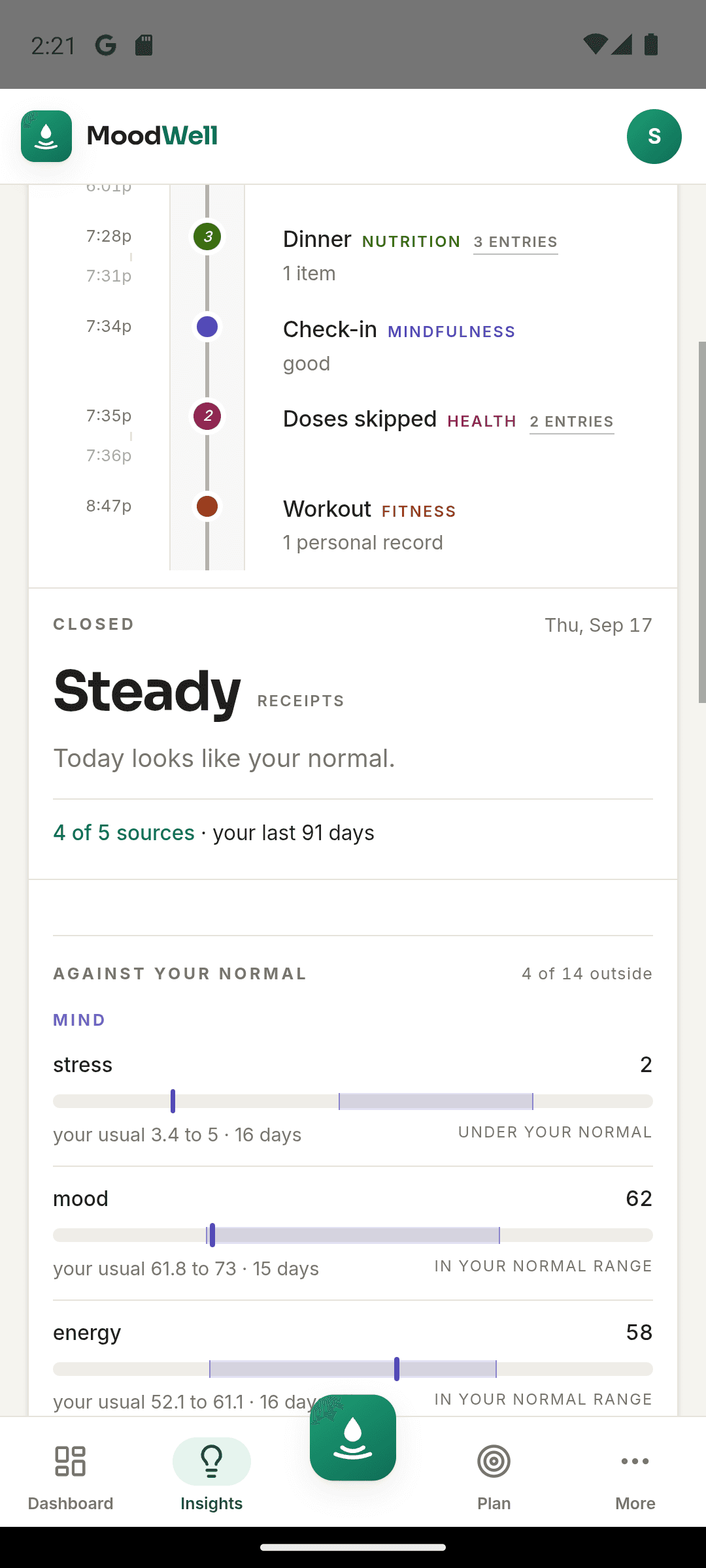
That matters on the days a food diary cannot explain. A skipped workout, a dose logged late and a low-energy check-in sit on the same screen as the lunch that looked fine. The connected dashboard compares periods and needs 21 paired days before it suggests a pattern, and a pattern is a question to ask, not a cause. Medication and supplement records stay out of that engine.
The dose record is the clearest gap. Moodwell logs a GLP-1 injection with its dose, date, time and site, symptoms with a severity, weight and supply, and keeps medication schedules separate from the doses actually logged. Cronometer has nowhere for any of that. Estimated drug levels in Moodwell are mathematical models, not measurements, and nothing in the app recommends a dose.
How does the coaching differ?
Cronometer’s Gold page describes Crono Coach as AI powered coaching that turns a user’s own data, goals and settings into short guidance. We have not run it and describe only what the page says.
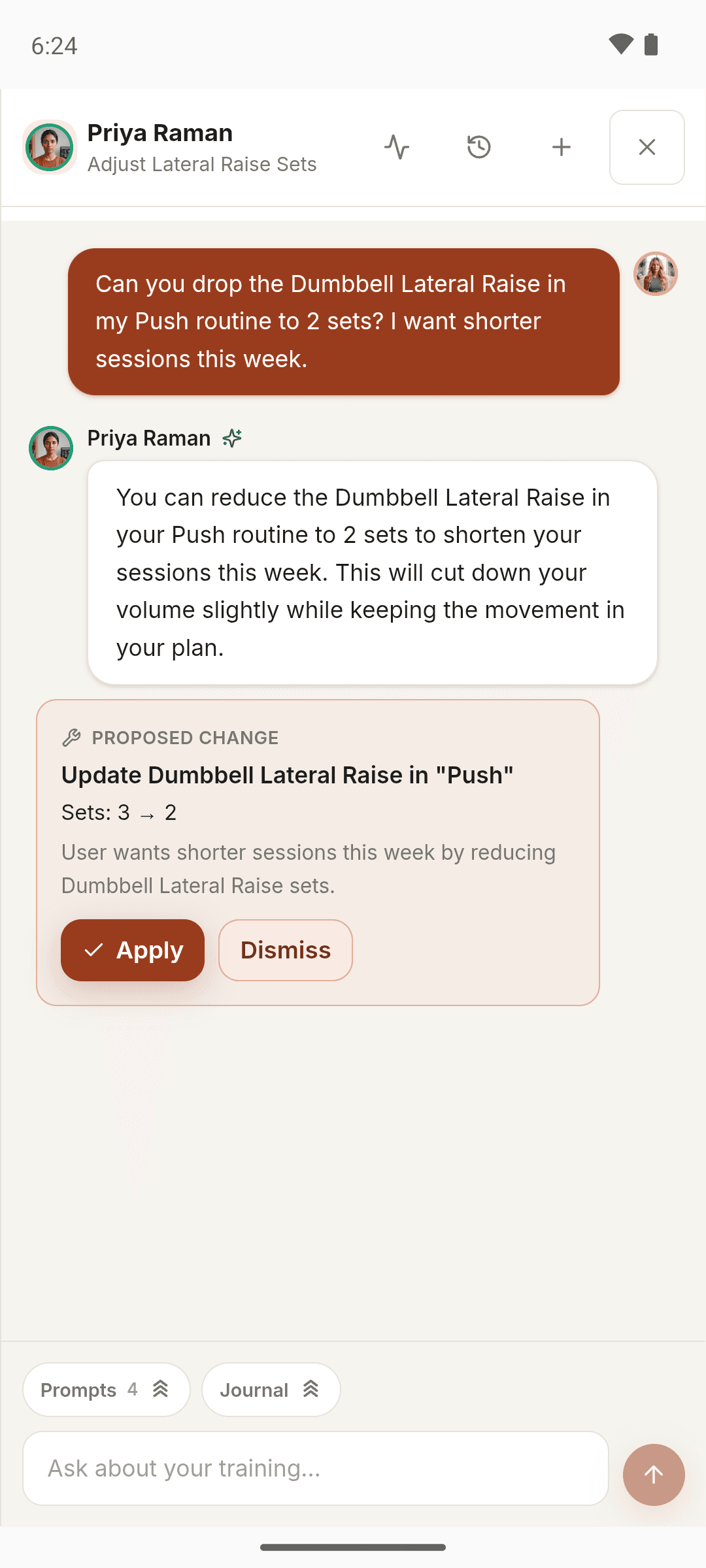
Moodwell has 13 coach personas, and one pick follows you across all four layers and the planner. The coach reads only the records you make available, proposes an action, and nothing changes until you confirm it. The personas are AI, not people or clinicians, and a reply can be wrong. Coaching uses credits; manual logging never does.
How does food logging compare day to day?
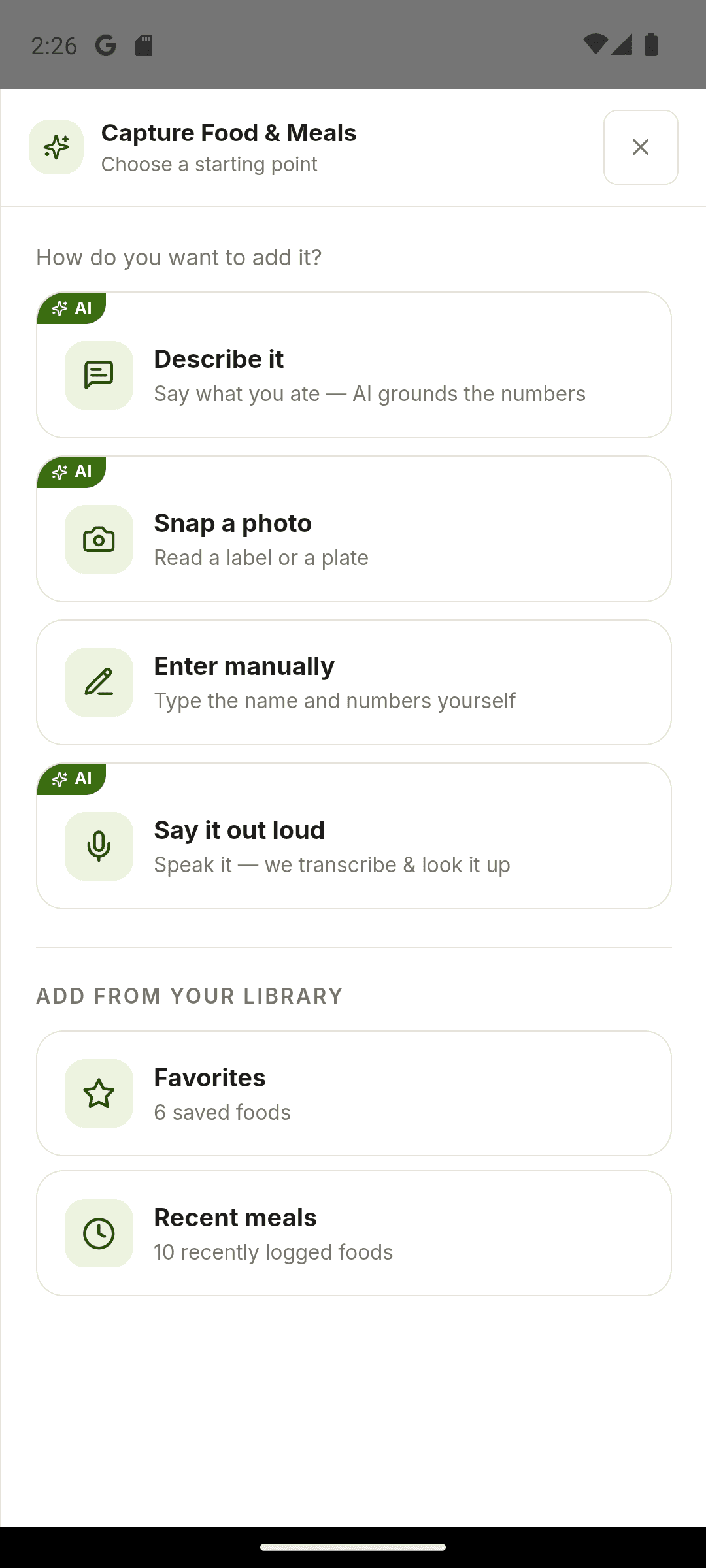
Both apps now accept a photo of the plate or a spoken description. The difference is what happens next. In Moodwell the AI estimate comes back as a food match and a portion that you review before saving, and the saved food goes into your favorites and recent foods so the second entry is a tap. There is no reference database behind it, so the estimate is only as good as the photo and your correction.
In Cronometer the match comes from a documented source that you can inspect, and a package scan narrows the product before you confirm the serving. If you eat a lot of packaged food, that is faster and more exact than a label photo. Our Cronometer vs MyFitnessPal comparison covers entries, portions and sources in detail, so this article does not repeat it.
Which one should you use?
Count the records you keep. If food is the only one, use Cronometer. Basic is free, Gold is $59.99 a year, and it does more with a meal than Moodwell does.
If you also log workouts, a prescribed dose or a mood check-in and you are tired of three apps, Moodwell is the one subscription that holds all four, at $9.99 a month or $99 a year on the web. The trade is nutrient depth, and it is a real trade.
If you want micronutrients and the same-day view, run both: Cronometer for food, Moodwell for doses, training and mood. Cronometer lists raw-data export in Basic, but Moodwell cannot import that file, so the two records stay separate.
One question decides it. On a bad day, do you want to know what was in the meal, or what else happened that day?
Follow the evidence
Sources & further reading
- Cronometer Gold and Basic plans
- Cronometer updates: what is new and improved
- Cronometer food data sources
- Cronometer subscription types
Product features and offers can change. Check the linked source for its current details.
About this voice
Mara Kessler
Mara Kessler is a Moodwell AI persona with a direct and decisive style. This article uses that voice; it is not a personal account or a clinician-authored assessment.
More from MaraFirst published Nov 3, 2026. Updated Nov 3, 2026. How we write and date articles.
A little more context
Questions, answered
Does Moodwell have a searchable reference database like Cronometer?
No. Foods in Moodwell come from AI estimates you review, photographs of nutrition labels and manual entries, and they stay in your own library of favorites and recent foods. Cronometer documents reference, branded and custom sources and lets you inspect where an entry came from.
Can Moodwell chart glucose from a CGM?
No. Cronometer lists CGM charts in its updates log. Moodwell has no glucose feature, and it reads only activity and recovery data from Health Connect on Android.
Can I move my Cronometer history into Moodwell?
No. Cronometer lists raw-data export in Basic, but Moodwell imports only a one-time Shotsy CSV of injections, weights and symptoms. An export in one app does not mean another app can read it. Moodwell has no export of its own.
Is Moodwell cheaper than Cronometer Gold?
No. Gold is $59.99 a year on the Gold page and Basic is free. Moodwell is $99 a year or $9.99 a month on the web with no free plan. Moodwell only costs less when it replaces more than one paid app.
Do Moodwell coaches change my records on their own?
No. A coach proposes an action, you see it, and it applies only after you confirm it. The coach reads only the records you have made available, and its replies can be wrong. The 13 personas are AI, not clinicians.