Mood check-in
Capture stress, energy, and context without needing a long entry.
View mood trackingFor demanding workdays
Notice the pressure, choose a grounding or reflection tool, and decide what the next workable action is.
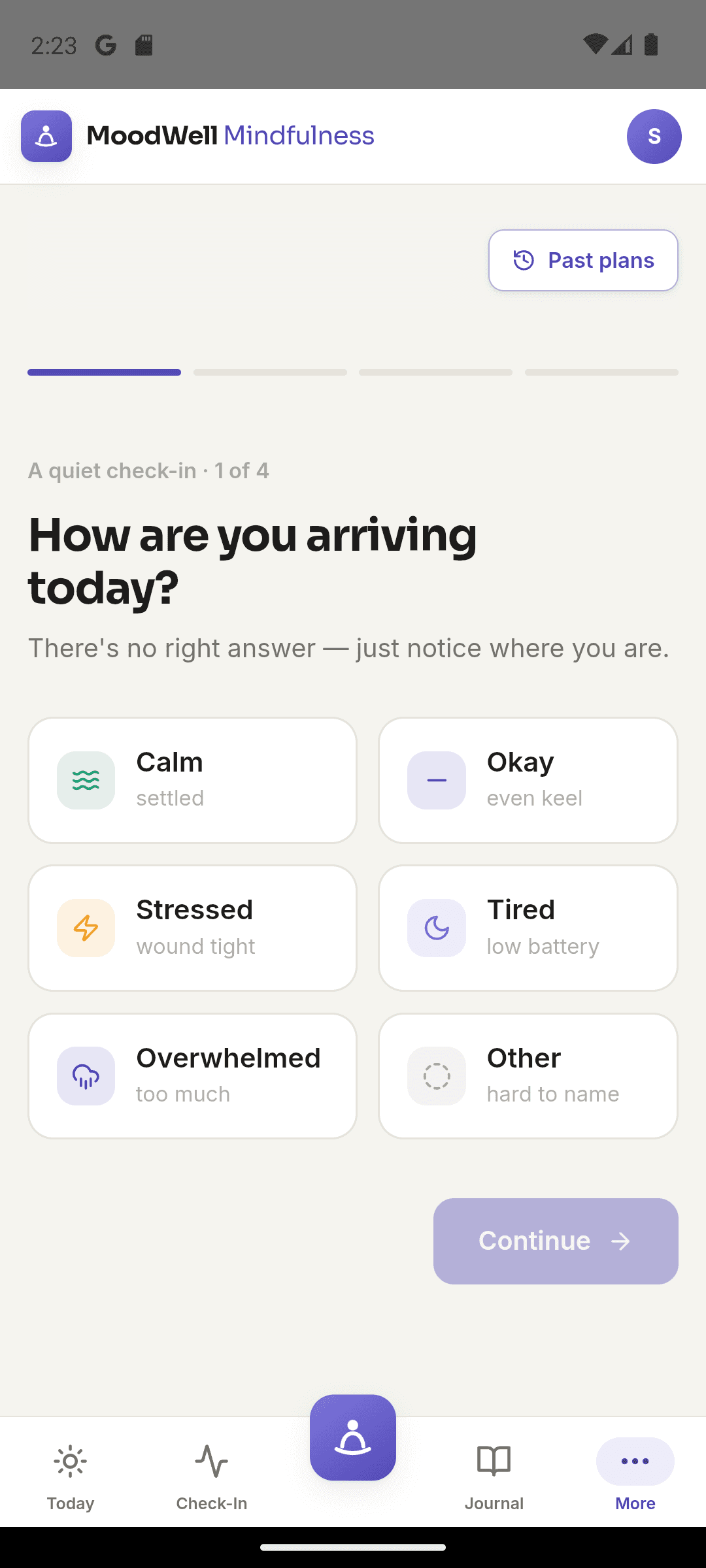
Start with a mood check-in to record stress, energy, and what happened. Open Box Breathing Trainer or a grounding exercise for a short pause, then use the journal or Thought Reframe to put the situation into words. Finish by choosing one task, question, or boundary to act on.
The situation
A tense conversation or crowded task list can follow you into the next hour. You may not have time for a long break, but moving straight into the next task can keep the pressure running in the background.
Moodwell gives you a place to record the moment before it disappears into the next meeting. A brief check-in can be enough. If you want more space, open a grounding exercise or write down the thought that keeps interrupting your attention.
Step by step
Record mood, stress, energy, and the work event that is still present.
Explore mood trackingOpen Box Breathing Trainer to follow its paced exercise, or Grounding 5·4·3·2·1 to work through what you notice around you. Choose the exercise that feels comfortable in the moment.
Browse wellbeing toolsJournal or use Thought Reframe when the situation is looping in your mind.
Explore Thought ReframeChoose one concrete task, boundary, question, or break and place it in the day.
See the plannerA practical example
You leave a meeting thinking, 'They have lost confidence in me.' In the journal, write the feedback you actually heard and how you interpreted it. Those two sentences give Thought Reframe a specific thought to explore instead of a broad request to fix your whole workday.
A possible next action is to ask, 'Which part of the draft should I change first?' Save that as a commitment if you want it in your plan. The useful result is a question you can ask; you do not need to feel completely settled before returning to your day.
Inside Moodwell
Capture stress, energy, and context without needing a long entry.
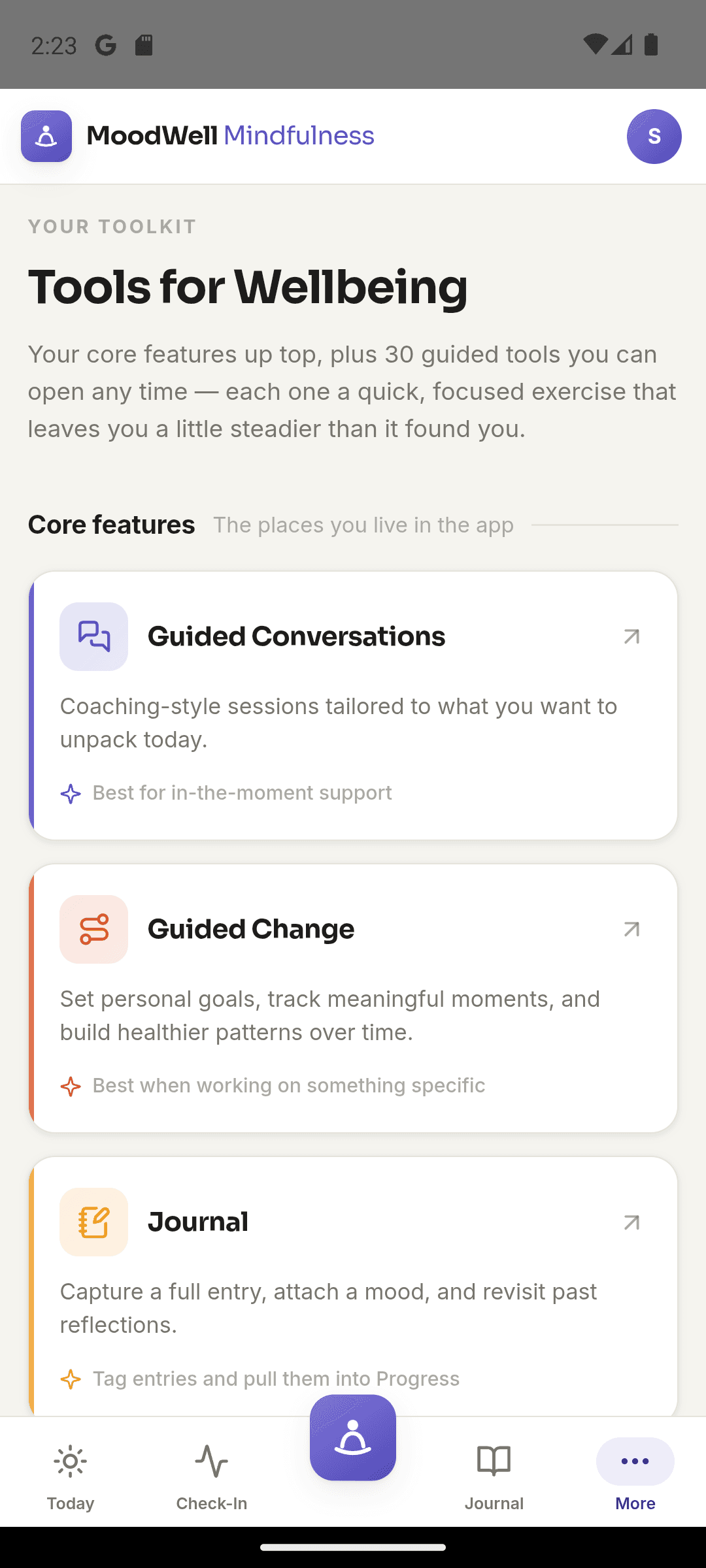
View mood trackingFollow Box Breathing Trainer or open Grounding 5·4·3·2·1 for a pause between tasks.
View the tool libraryKeep one useful intention visible during a demanding day.
View Daily FocusAcross your day
Your workday check-in becomes part of the same account as lunch, your workout, and the evening plan. When you revisit a demanding day, you can find what you wrote at the time and see what else you recorded around it.
Go deeper
Build a short check-in you can repeat, know what to record, and use the history without turning it into another chore.
Read the guideSee how a thought reframe can widen your view of a difficult situation without asking you to pretend everything is fine.
Read the guideCreate a short morning sequence that checks your current state, names one priority, and leaves room for the day to change.
Read the guideMoodwell
Choose Android or iOS to see the current release, beta, or waitlist option.
Questions, answered
Choose something that fits the time and attention you have between tasks, and recognize when a tool is not enough.
Explore all FAQsMood check-ins, Box Breathing Trainer, and a short journal entry can fit a small break. For a thought you keep replaying, Thought Reframe offers a more structured reflection. You can choose one tool without completing the whole workflow.
A reflection tool cannot fix an unsafe situation. Use appropriate workplace, legal, medical, or emergency support for your circumstances.
No. A brief mood check-in, one sentence about what is occupying your attention, or a short grounding exercise may be enough. Choose one activity that fits the break you have. You can come back for a longer reflection later if you want to.
Find a short wellbeing toolNo. You can record a mood check-in, write a journal entry, and use Box Breathing Trainer without an AI conversation. AI tools such as Thought Reframe use credits; check the cost shown in the app before running them.