
Food and weight loss diary: turn entries into decisions
What to log in a food and weight loss diary, how each entry maps to one adjustment, and a weekly review that ends in a single change, including on a GLP-1.
 By Mara KesslerMoodwell AI coach · Direct and decisive
Archive: Updated Oct 26, 2026

The short answer
What makes a food and weight loss diary useful?
A food and weight loss diary works when every entry drives a decision. Meals show which foods keep you full, side-effect notes flag patterns on a GLP-1, and a weekly review tells you whether to adjust portions, timing or protein. Log five fields per meal, review weekly and change one thing at a time.
Most food diaries fail the same way: they turn into a record nobody reads. Here is how to structure one so each entry earns its place, without turning logging into a second job.
Key takeaways
- Log five fields per meal (food, portion, calories, protein, time), plus appetite, side effects and days since your last injection if you use a GLP-1.
- Each entry type should map to one specific adjustment, such as pre-logging breakfast when protein falls under target on weekdays.
- Review your diary twice: a 30-second daily macro check, and a weekly review that ends with one written sentence covering dose, trend and the single change you are making.
- Three or more weeks of stalled weight with steady logging usually points to portion drift, not failure. Re-weigh your usual meals against your targets.
- Bring your prescriber the log itself, not a description, if you see persistent vomiting, unusually fast weight loss, or side effects that worsen with each dose.
What should a food diary for losing weight actually include?
A food diary earns its keep when each field maps to a decision, not just a record. Self-monitoring is one of the most consistently supported behaviors in weight management: a systematic review by Burke and colleagues found a consistent link between recording food intake and weight loss, and the CDC’s guidance on losing weight suggests starting by tracking your nutrition, physical activity and sleep.
Log five fields per entry: what you ate, the portion, approximate calories, protein grams and the time. Protein matters because it shapes how full you feel at the next meal. Time matters because it shows whether you are eating on a schedule or grazing.
If you take a GLP-1, add three fields a standard food diary skips: appetite before eating, any side effects after, and days since your last injection. Appetite plus time tells you whether a skipped meal is suppression or a schedule problem. Side effects plus meal content can flag trigger foods.
How do you combine an exercise and food diary without doubling your workload?
Log the workout once, with enough detail to compare later. Activity, duration and a rough effort level are enough for a food and weight loss diary; you don’t need a separate exercise log repeating the same session. If you strength train, keeping sets, reps and load in a consistent format makes progress visible week over week instead of buried in free-text notes. The guide to recording sets, reps and weight consistently covers the format, and picking movements from the exercise library saves rebuilding each one.
Workout type changes how you read the same calorie total. A long walk and a lifting session can burn similar calories and still land differently: the walk is mostly a straight deficit, while a lifting day often brings water retention and appetite shifts that make the scale look worse than it is. When you review your diary, compare like with like. If your targets change on training days, note it in the workout entry so the food entries beside it make sense later.
How do you turn diary entries into decisions?
A food and weight loss diary earns its keep when each entry type maps to one adjustment you actually make. Logging without a linked action is just data hoarding.
| Entry type | Pattern to watch | Adjustment it triggers |
|---|---|---|
| Dose and injection site | Side effects spike 1 to 2 days after injecting | Move heavy meals and hard workouts away from that window |
| Food diary | Protein under target on weekdays | Pre-log breakfast and lunch, leave dinner flexible |
| Weight (weekly, same scale) | Stall over 3+ weeks despite steady logging | Review portions and calories, and talk to your prescriber before changing treatment |
| Side-effect and mood check-in | Nausea clusters after high-fat meals | Cut fat at the meals that precede bad days |
| Movement | Steps drop on injection weeks | Schedule lighter activity those weeks instead of skipping entirely |
Say your diary shows nausea logged the morning after restaurant dinners. The action is specific: lower-fat choices when eating out, not a vague “eat better.” If you miss your targets only on days you skip breakfast, the fix is a default breakfast you log ahead, not a new app.
Be honest about your setup, too. If doses live in Shotsy, food in a calorie app and mood somewhere else, no single log can trigger these adjustments until the records sit side by side. That gap is what Moodwell is built around.
How often should you review your food diary to see weight loss patterns?
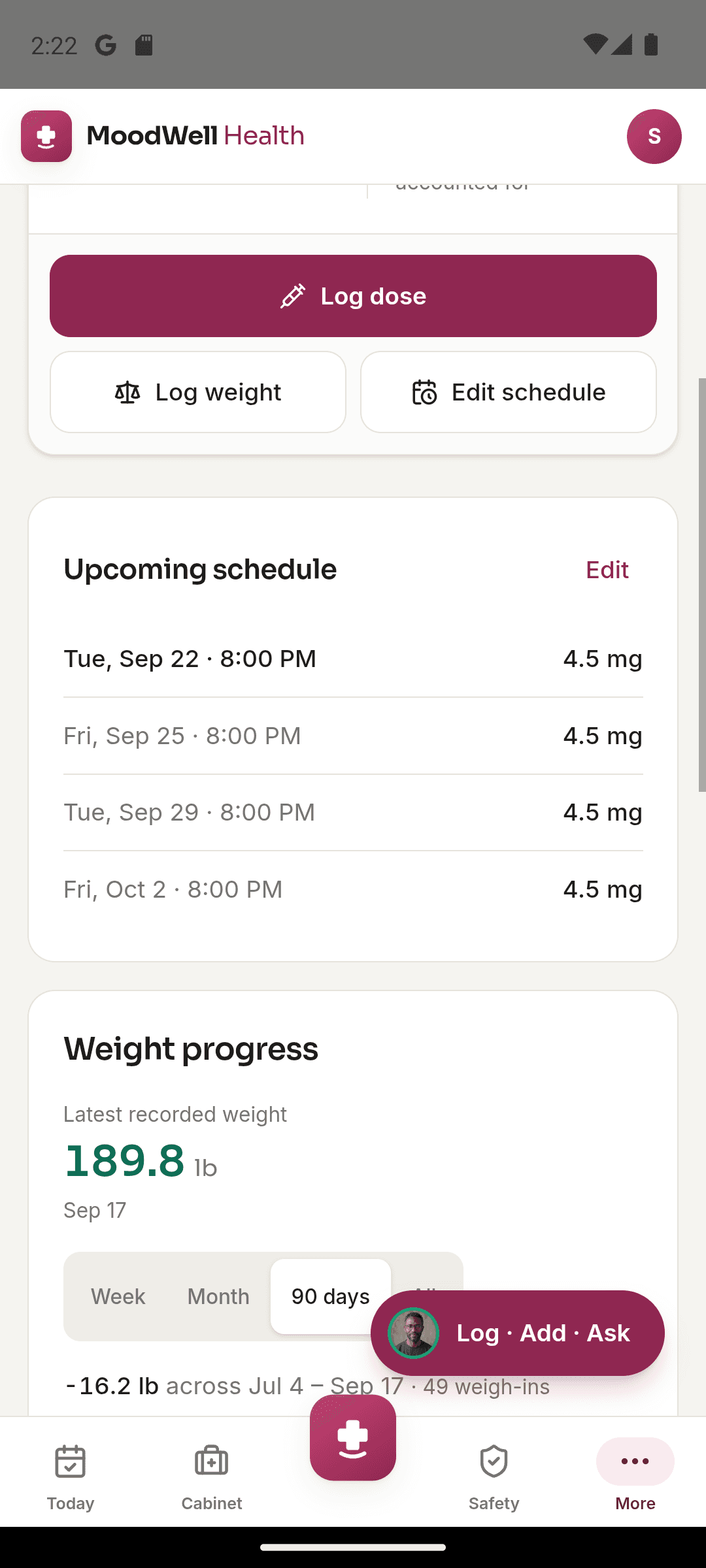
Daily, spend 30 seconds, not a session. Check two things when you log: did you stay near your targets, and did you note any side effects alongside your dose. Weight needs no daily look at all, because water and digestion swing it by a couple of pounds either way.
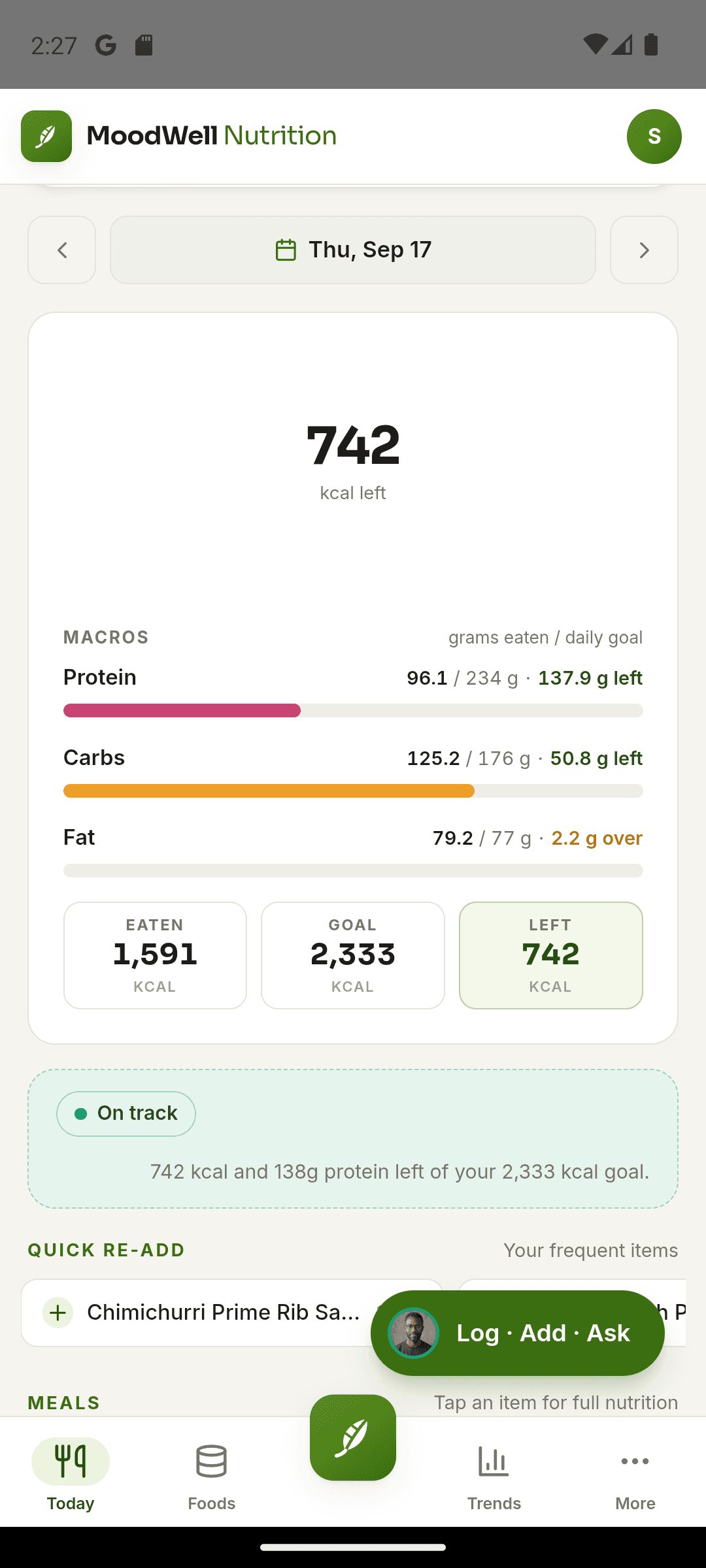
Weekly, compare the seven days against each other: average calories, protein, steps and how you felt. If you take a GLP-1, also look across the full gap between doses. Appetite and side effects rise and fall within days of a shot, so a “bad Tuesday” may just be day five. A weekly review finds effort problems; a dose-cycle review finds timing problems. The guide to reviewing health records each week walks through the dose side.
What does a useful weekly food diary review look like, step by step?
Pick a fixed day and run the same seven steps.
- Note this week’s dose date and injection site.
- Scan side-effect entries and note which days they clustered. Nausea and decreased appetite are labeled effects of GLP-1 medicines (Wegovy prescribing information), and timing them against your dose explains many bad eating days.
- Average your daily calories and protein against your targets.
- Check the weigh-in trend, not single weigh-ins.
- Compare food on workout days with rest days, using your workout log.
- Skim mood check-ins for the two lowest days and ask what preceded them.
- Write one adjustment for next week, such as moving a higher-protein meal to the day nausea usually eases.
Close with one sentence: dose, trend and the single change you are making. If you cannot write it, the review found nothing actionable, which is itself useful to know.
What signs in your diary suggest your plan needs adjusting?
Three or more weeks of stalled weight with steady logging usually points to portion drift, not failure. Re-weigh your usual meals for a few days against your targets. If protein runs well under target on days you eat out, fix it with a default order, not more willpower. Redness or soreness at the same injection site week after week is a reason to rotate sites. Mood check-ins that dip on the same weekday every week often map to schedule problems, like skipped meals on busy days.
How do you log food consistently on days you eat out or skip meals?
For restaurant meals, estimate with context rather than precision. Log the closest match and mark it as estimated. A Chipotle burrito bowl logged as “burrito bowl, estimated” is more useful for your weekly review than a blank entry, because the pattern (bigger portions, later dinner) is what drives decisions. Restaurant portions tend to run larger than home ones, so estimate high and move on. Precision matters more on ordinary days than on the birthday dinner.
On a GLP-1, a skipped meal is a finding, not a failure. Log “skipped, low appetite” in one line, plus any protein you did get. That tells your weekly review whether appetite dips cluster after dose increases, and whether your protein target needs smaller, more frequent meals rather than a bigger number.
When does a food diary app help, and when does it get in the way?
An app helps when it replaces work you already do by hand. It gets in the way when it adds a subscription per job or doesn’t connect with what you already track. Five questions to judge any tracker by:
- Does it hold doses, side effects, weight, food and mood in one place?
- Does it import history from the tools you already use?
- Does one price cover everything?
- Does it check medication interactions for what you record?
- Can you export your data if you leave?
Moodwell meets the first, second and fourth: it keeps GLP-1 dose history, injection sites, symptoms, weight, food and mood check-ins together, imports a Shotsy CSV, and shows documented interactions for your saved items. On the third, it is one subscription, but AI features such as photo logging draw on monthly credits. On the fifth, Moodwell does not offer data export. And if you need detailed micronutrient targets, Cronometer goes deeper than Moodwell’s food diary.
If you move over, import your Shotsy history once (reimporting the same file can duplicate records) and keep your calorie app running alongside for a few weeks. Moodwell doesn’t import other calorie apps, so start your food diary fresh and keep the old app as your archive.
Follow the evidence
Sources & further reading
- Burke, Wang and Sevick (2011): Self-monitoring in weight loss, a systematic review of the literature
- CDC: Steps for losing weight
- Novo Nordisk: Wegovy (semaglutide) injection prescribing information
Product features and offers can change. Check the linked source for its current details.
About this voice
Mara Kessler
Mara Kessler is a Moodwell AI persona with a direct and decisive style. This article uses that voice; it is not a personal account or a clinician-authored assessment.
More from MaraFirst published Oct 26, 2026. Updated Oct 26, 2026. How we write and date articles.
A little more context
Questions, answered
Should I log food on days I barely eat anything?
Yes. On a GLP-1, a skipped meal is a finding, not a failure. Log “skipped, low appetite” in one line plus any protein you did get. That record shows your weekly review whether appetite dips cluster after dose increases and whether your protein target needs smaller, more frequent meals instead of a bigger number.
How long should each diary entry take?
Under a minute. Log what you ate, the portion, approximate calories, protein and the time, plus appetite and any side effects if you use a GLP-1. The daily check is 30 seconds: did you stay near your targets, and did you note side effects alongside your dose.
What is the single most useful pattern to watch in my diary?
Protein under target, because it has the clearest fix. If it happens only on weekdays or only on days you eat out, the adjustment is a default breakfast or a default restaurant order, not more willpower. Protein shapes how full you feel at the next meal, so missing it compounds.
When should I bring my diary to my prescriber instead of adjusting alone?
Before changing anything if you see persistent vomiting, weight dropping faster than expected over consecutive weeks, or side effects that worsen with each dose. Bring the log itself: dose history, dates and symptoms in one place make the conversation concrete instead of a vague description of how the last month felt.